

Battery Recycling & Disposal for UK Businesses
Batteries are the part of an IT clearance most companies aren’t set up to handle. They can’t go in general waste, many recyclers won’t take them, and the rules change with the chemistry: a UPS string, a box of laptop batteries and a drawer of AAs each need a different route.
Computer IT Disposals provides certified battery recycling for businesses, schools, universities and public sector organisations across England, Scotland and Wales: from a single UPS unit to full server-room battery banks and bulk industrial quantities, segregated by chemistry, collected by our own BS 7858 vetted staff and processed at our Environment Agency licensed facility, with 100% diverted from landfill.
Our process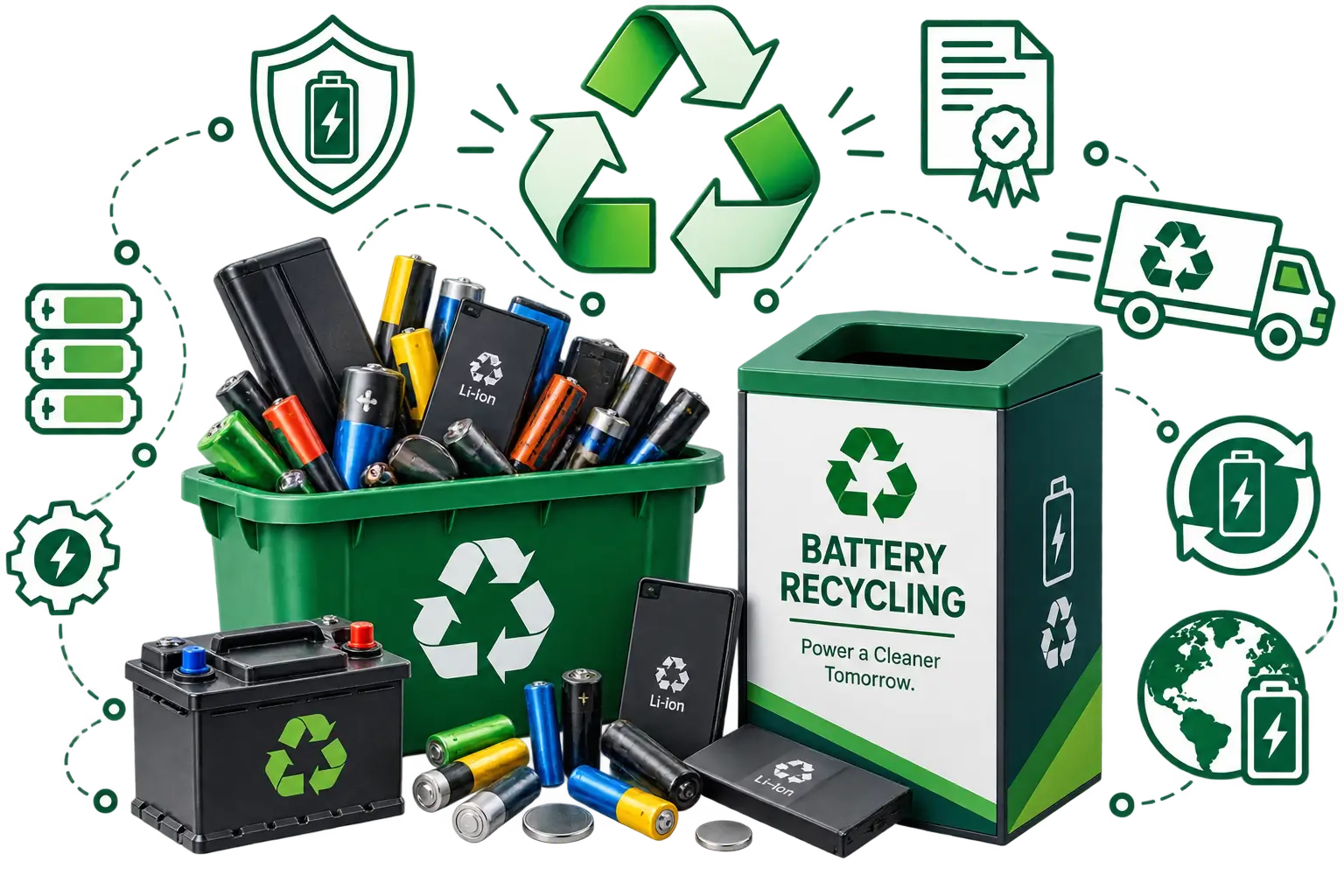
Battery Recycling At A Glance
- What it is:Business battery recycling is the compliant collection and processing of waste batteries, segregated by chemistry, with the metals recovered and the paperwork your Duty of Care requires.
- Who provides it:Computer IT Disposals (Commercial IT Recycling Ltd) provides battery recycling to UK organisations. Established 2014, processing at an Environment Agency licensed facility in Nottingham.
- Types accepted:UPS and standby batteries, lead-acid, VRLA and SLA, lithium-ion and lithium-polymer, laptop and device batteries, NiMH, NiCd, alkaline, and specialist cell sizes.
- Scope:Single units to complete UPS battery strings, cabinets and battery banks, including decommissioning and removal, plus standby generators.
- Logistics:Our own GPS-tracked vehicles and BS 7858 vetted staff, with batteries segregated by chemistry and packaged for safe transport.
- Evidence:Battery Recycling Certificate, WEEE Certificate, Waste Transfer Note and ESG Report within five working days under one collection reference.
What Is Business Battery Recycling?
Battery recycling is the process of collecting spent batteries, sorting them by chemistry and recovering the metals inside, such as lead, nickel, cobalt and lithium, so they return to manufacturing instead of leaking into soil and water. For a business, it is also a legal duty: waste batteries must go to a licensed carrier and an approved route, with paperwork to prove it.
Professional battery disposal takes the chemistry question off your hands. We identify what you have, separate the streams, package each one for safe transport and certify the result, so a mixed box from the stores cupboard and a pallet of UPS batteries follow the same documented process.
Can Batteries Go in the Bin or the Recycling Bin?
No. Batteries must not go in general waste or mixed recycling. Damaged lithium batteries can start fires in bins, vehicles and waste sites, and lead-acid and nickel-cadmium batteries are hazardous waste. Businesses must keep batteries separate and hand them to a licensed carrier with a Waste Transfer Note.
Why Batteries Need Specialist Handling
Every chemistry carries its own risk. Lithium cells that are crushed, punctured or short-circuited can overheat and ignite, which is why battery fires in bins and waste vehicles are now a familiar headline. Lead-acid batteries contain lead and sulphuric acid that can leak if a case cracks. Nickel-cadmium packs contain cadmium, a toxic heavy metal.
That is why many general waste contractors and IT recyclers won’t take batteries at all, and why mixing chemistries in one box creates a hazard in transit. Safe battery disposal starts with knowing what you have, keeping the types apart and moving them with a carrier that is set up for it.
Batteries We Recycle
We can handle most battery chemistries, in standard and specialist sizes:
| Battery type | Examples | How it’s handled |
|---|---|---|
| UPS and standby |
|
Removed and decommissioned on site |
| Lead-acid |
|
Hazardous stream, correct paperwork |
| Lithium-ion and lithium-polymer |
|
Segregated and packaged separately |
| Laptop and device batteries |
|
Loose or swollen batteries accepted |
| Nickel batteries |
|
NiCd handled as hazardous |
| Alkaline and mixed office |
|
Sorted by chemistry at our facility |
| Specialist and non-standard |
|
Confirmed before booking |
| Standby generators |
|
Decommissioned alongside your battery systems |
Not sure whether yours qualifies? Send us the details, with the chemistry, size and quantity if you know them, or a photo if you don’t, and we’ll confirm before you book.
UPS Battery Recycling for Server Rooms and Data Centres
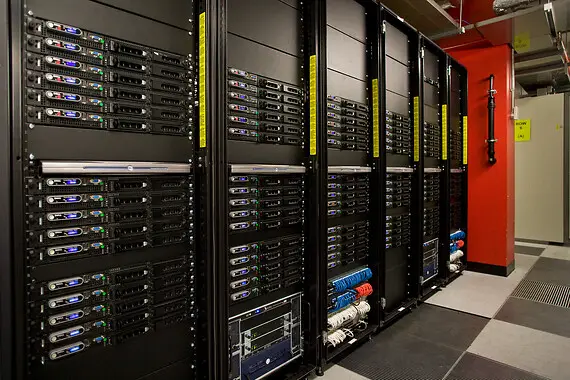
Battery replacement is routine maintenance for any server room, but the old string doesn’t disappear on its own. We remove and recycle complete UPS battery sets during your maintenance window, with out-of-hours and weekend scheduling available for server room and data centre projects. Complete UPS units, cabinets and battery strings are removed, including decommissioning of the hardware itself.
If you’re replacing like-for-like, we can schedule collection to coincide with your installer’s visit, so old batteries never sit on site. We regularly clear battery banks as part of full data centre decommissioning projects, and alongside server recycling when the hardware they supported retires too.
Lead-Acid Battery Recycling
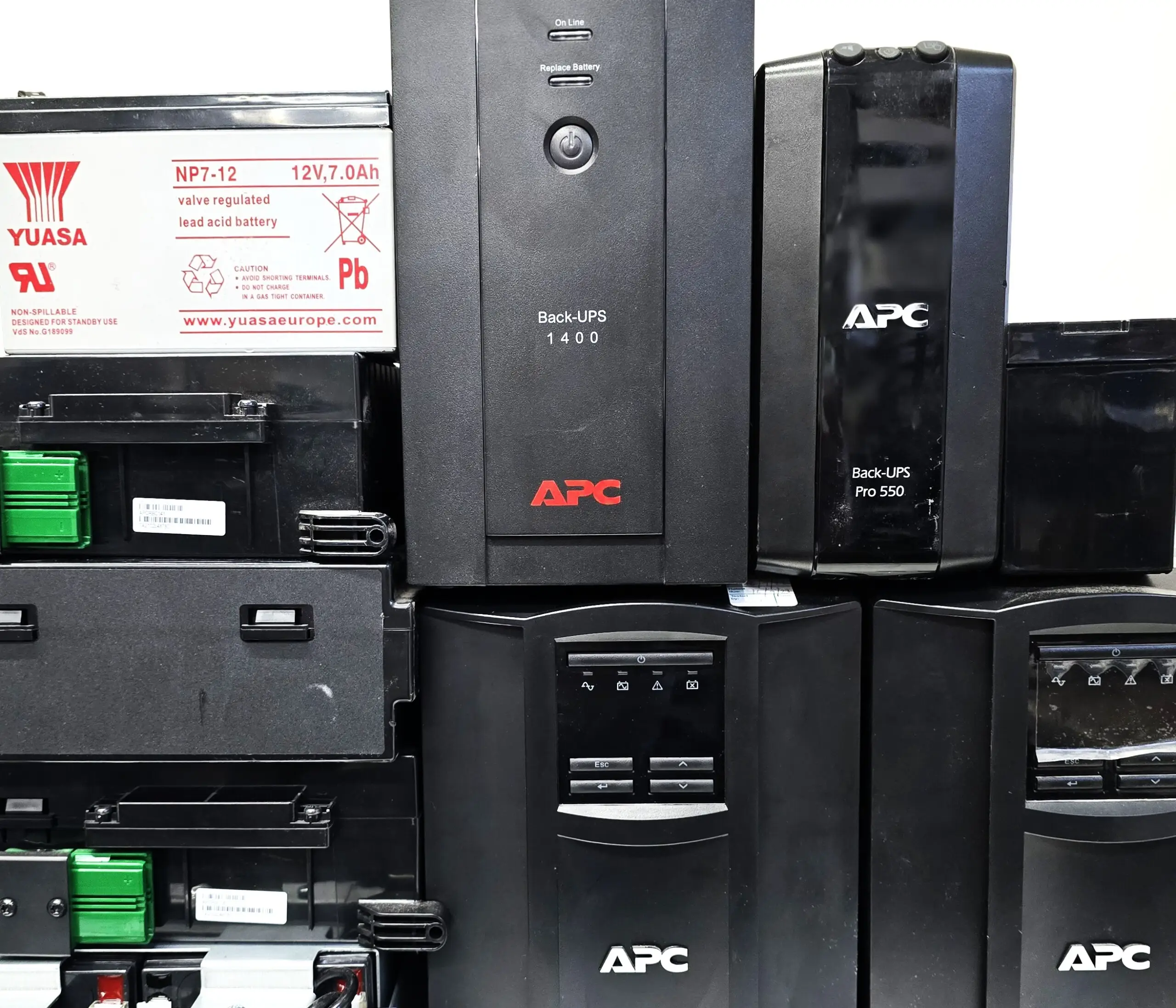
Lead-acid batteries are the workhorses behind most UPS and standby power systems, in VRLA, sealed lead-acid (SLA) and gel formats. They are heavy, they contain lead and sulphuric acid, and they must be handled and transported upright and intact. Our lead-acid battery recycling covers single units to complete strings, with each battery counted onto your paperwork.
Lead is one of the most recyclable metals in industry. Once the batteries reach an approved treatment route, the lead and plastic cases are recovered and returned to manufacturing supply chains.
Choosing a Lead-Acid Battery Recycling Company
Before you appoint a provider for lead-acid batteries, check three things: that they hold a waste carrier licence and use a licensed facility, that they prepare hazardous waste paperwork rather than leaving it to you, and that they can remove complete UPS strings and cabinets, not just loose batteries. Sealed lead-acid (SLA) and gel units follow the same process.
Are Lead-Acid Batteries Hazardous Waste?
Yes. Lead-acid and nickel-cadmium batteries are classified as hazardous waste, so they must move under the correct hazardous waste paperwork. We prepare and complete it as part of the collection, and count every battery onto your documents.
Lithium Battery Recycling and Disposal
Lithium-ion and lithium-polymer batteries power laptops, phones, handheld scanners, drones and portable equipment. They store a lot of energy in a small space, and a damaged or short-circuited cell can overheat and catch fire. That makes lithium battery disposal the stream that needs the most care in storage and transit.
Our lithium battery recycling covers loose cells, device batteries and bulk quantities of drone and multi-cell packs. Lithium batteries are segregated from other chemistries at every stage, packaged for safe transport and processed so the metals inside can be recovered.
Lithium-Ion Battery Recycling for Device Fleets
Device fleets create lithium waste in volume: handheld scanners in warehouses, tablets in the field, power banks, radios and spare laptop packs. Lithium-ion battery recycling for a fleet runs as one planned collection, with batteries counted by type onto your paperwork, rather than a drawer that fills up for years.
Storing Lithium Batteries Safely Before Collection
Until collection, keep lithium batteries in a cool, dry place away from heat and flammable materials. Tape over exposed terminals, don’t stack loose batteries in metal containers, and keep damaged or swollen batteries apart from the rest. Tell us about any damaged batteries when you book, so we can plan how they travel.
Laptop and Computer Battery Recycling
Laptop and computer batteries are lithium-ion, and they are the batteries most offices build up without noticing: spares in drawers, packs removed during repairs, and swollen batteries set aside because nobody knew what to do with them. Loose or swollen batteries can travel on the same collection as your IT.
When the laptops themselves retire, our laptop recycling service removes every battery and sends it through its own certified stream, while the devices go through certified data destruction. Desktop and server clear-outs run through our computer recycling service on the same visit.
Specialist, Bulk and Non-Standard Batteries
We work with manufacturers and operators whose batteries don’t fit standard recycling streams: large quantities of multi-cell packs, non-standard cell sizes and bulk industrial volumes. Send us the chemistry, format and approximate quantity, and we’ll confirm the route, the packaging and the cost before you book.
Battery Disposal Across Multiple Sites
Branch networks, retail estates and multi-site organisations have batteries everywhere: a UPS in every comms cupboard, handheld scanners in every store and spare packs in every office. We run multi-site battery disposal to one schedule, site by site, with consolidated documentation per collection, so your compliance team sees the whole estate rather than a pile of separate notes.
How to Dispose of Batteries as a Business
If you’re working out how to dispose of batteries from a workplace, the compliant route comes down to five steps:
- Separate batteries from other waste.Keep them out of general waste, mixed recycling and WEEE cages where possible.
- Sort by type.Keep lithium apart from lead-acid and other chemistries, and set damaged batteries aside.
- Store them safely.Cool, dry and away from heat, with exposed terminals taped.
- Use a licensed carrier.Check the carrier’s Environment Agency registration before anything leaves your site.
- Keep the paperwork.File the Waste Transfer Note, any hazardous consignment notes and your Battery Recycling Certificate.
We cover every step after the first two, and we can help with those too: tell us what you have and we’ll advise on sorting and storage before the collection.
Battery Recycling Laws for Businesses
Several sets of rules apply. The Waste Batteries and Accumulators Regulations 2009 govern how batteries are collected and treated, and industrial and automotive batteries, including most UPS and standby batteries, must not be sent to landfill or incinerated. Lead-acid and nickel-cadmium batteries are hazardous waste and need consignment paperwork.
Your waste Duty of Care applies to every battery: it must only go to a licensed carrier, with a Waste Transfer Note. Where batteries are inside electrical equipment, the WEEE Regulations apply as well, and the batteries are removed and treated separately. Our WEEE recycling service handles the equipment from the same site.
Batteries Inside Equipment
You don’t need to strip batteries out of laptops, UPS units or handheld devices before collection. Where batteries are inside equipment we collect, they are removed at our facility and sent through their own certified route, while the equipment is processed separately.
What Happens to Your Batteries?
Collected batteries travel in our own GPS-tracked vehicles, segregated by chemistry and packaged for transport, to our Environment Agency licensed facility. There they are sorted, logged against your collection reference and processed through the correct route for each chemistry.
Metals such as lead, nickel, cobalt and lithium are recovered and returned to manufacturing supply chains rather than landfill, consistent with our policy that 100% of what we collect is diverted from landfill. An ESG Report is available showing what was recovered, for your sustainability reporting.
How Are Lithium Batteries Recycled?
At an approved treatment facility, lithium batteries are discharged, dismantled and mechanically processed into a metal-rich concentrate known as black mass. Metals such as lithium, cobalt and nickel are then recovered from it for use in new batteries and other products, while casings and other materials go to their own recycling streams.
How Are Lead-Acid Batteries Recycled?
Lead-acid batteries are broken down so that the lead, the plastic cases and the acid can be separated. The lead is smelted and refined for reuse, often in new batteries, and the plastic is recycled into new cases and other products.
How Battery Recycling Works
Is Battery Collection Free?
Battery collections are quoted based on chemistry, quantity and location. Send us your list and we’ll confirm the cost before you book, or whether the batteries can travel with a larger IT clearance that qualifies for free collection, typically 20 or more items such as desktops, laptops and servers.
What Affects the Cost of Battery Disposal?
Where a charge applies, it depends on the chemistry (lead-acid and damaged lithium need more handling), the total weight and quantity, whether UPS units need decommissioning and removal, and access at your site. Any charge is agreed and approved by you, or your finance team, before anything is booked.
Why Businesses Choose Our Battery Recycling Service
Battery Recycling Across the UK
We provide battery recycling UK-wide, and battery disposal for every chemistry, across England, Scotland and Wales. London is our busiest area; see our London IT disposal service. For local details, choose your area:
Battery Recycling for Schools, Universities and the Public Sector
School and university estates run on the same maintenance cycles as any business, with UPS batteries in comms rooms and piles of spent batteries from science departments, IT support and site teams. For education clients, we can schedule battery and UPS collections into holiday periods, with purchase orders accepted.
Public sector organisations get the same documented process, with one collection reference covering batteries and any IT collected on the same visit through our IT asset disposal service.



Frequently Asked Questions
Booking Form
Free collection available for qualifying items · certificates within 5 working days · 100% diverted from landfill.