

Data Centre Decommissioning & Server Removal Services
Decommissioning a data centre, or a single row of racks, is not a job for a general waste contractor. It happens inside live environments, against maintenance windows, under access control, and every asset that leaves the floor has to be accounted for.
Computer IT Disposals works as an approved contractor to data centres across the UK, from commercial facilities and colocation halls to server rooms and university research computing. We provide secure data centre decommissioning: servers, networking, storage and complete racks removed by inducted, BS 7858 vetted teams, every drive logged by serial number and certified destroyed, and a full audit report within five working days.
Our process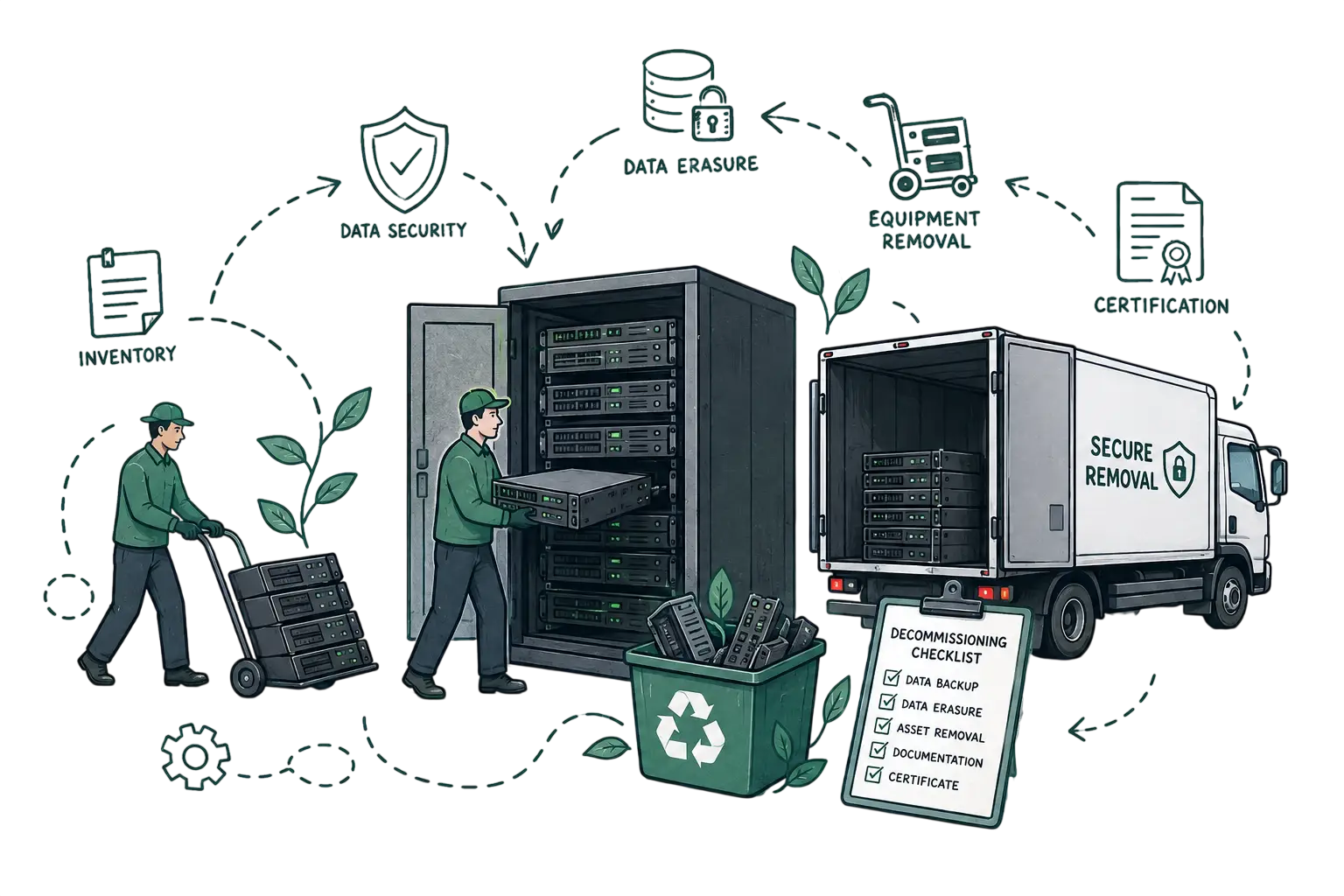
Data Centre Decommissioning At A Glance
- What it is:Data centre decommissioning is the planned shutdown, removal and disposal of IT infrastructure from a data centre or server room, with every asset tracked and all data destroyed to a recognised standard.
- Who provides it:Computer IT Disposals (Commercial IT Recycling Ltd) provides data centre decommissioning across the UK. Established 2014, processing at an Environment Agency licensed facility in Nottingham.
- Scope:Servers, networking, SANs and storage, tape libraries, complete racks and cabinets, cabling and containment, PDUs, UPS systems and battery banks.
- Access:Teams inducted to major UK data centres, including sites in Slough, London Docklands (E14) and Reading, with BS 7858 vetted staff named in advance.
- Documentation:Method statements and risk assessments (RAMS), health and safety policies and data security documentation prepared and approved before work begins.
- Destruction:Erasure to HMG IS5 or NIST SP 800-88 Rev 2, or shredding to BS EN 15713, on-site or at our facility, with every drive logged by serial number.
- Overseas:US, European and Middle East organisations book UK decommissions remotely, with certification delivered electronically.
- Evidence:Serialised audit report, Data Destruction Certificates and WEEE Certificate within five working days under one collection reference.
What Is Data Centre Decommissioning?
Data centre decommissioning is the physical end of an IT migration or closure. Once workloads have moved, the hardware that ran them has to be powered down, disconnected, logged, de-racked, removed and disposed of, with every drive that held data destroyed and certified. Done well, it leaves an empty, clean floor and a paper trail your auditors can follow from rack position to certificate.
The triggers vary: a move to the cloud, a consolidation of two sites into one, a colocation contract ending, a hardware refresh, or a whole facility closing. The job is the same in each case, and so is the risk. A single drive that leaves the building unaccounted for can undo the security of the entire project.
Decommissioning, Recycling or Disposal?
The terms overlap. Decommissioning covers the planned removal from a live environment: scheduling, access, disconnection and de-racking. Disposal covers what happens next: data destruction, resale where there is value, and recycling. We handle both, so a data centre decommissioning project runs from the first rack to the final certificate with one provider. For smaller volumes of servers without the data centre logistics, see our server recycling service.
Data Centre Equipment We Decommission
Every layer of the IT estate, from single units to full halls:
| Equipment | Examples | How it’s handled |
|---|---|---|
| Servers |
|
Logged by serial; drives destroyed; value assessed |
| Networking |
|
Configurations wiped or devices destroyed |
| Storage |
|
Every drive logged and certified destroyed |
| Tape and media |
|
LTO tapes shredded to 10mm |
| Racks and cabinets |
|
De-racked, dismantled where required, removed |
| Cabling and containment |
|
IT strip-out cleared with the racks |
| Power |
|
Batteries handled through their own certified route |
Battery strings, UPS systems and standby generators follow their own certified route through our battery recycling service, collected alongside the hardware they supported.
Built Around Your Maintenance Window
Data centre work happens when the facility says it happens. We schedule data centre decommissioning around your maintenance windows, with out-of-hours, overnight and weekend work available by arrangement. Our crews arrive induction-ready, named in advance for your access control, and work to your site rules and escort requirements.
From a single-visit rack clearance to a phased, multi-visit migration, the schedule is built around your operation, not ours. Collections can be scheduled for a specific date to fit a lease return or a colocation exit. For universities and colleges, decommissioning can be planned into vacation periods, when campus systems are quietest.
Site Access, Inductions and RAMS
Our teams are registered and inducted with major UK data centres, having completed their site access, security and health and safety courses, including facilities in Slough, London Docklands (E14) and Reading. Every crew member is directly employed and BS 7858 vetted, and names can be supplied in advance for your access lists.
Before any work starts, we prepare method statements and risk assessments (RAMS), health and safety policies and data security documentation for your approval. Larger projects start with a free site survey, so lifts, loading docks, floor loading and escort rules are planned before the first rack moves.
Working in Live Environments
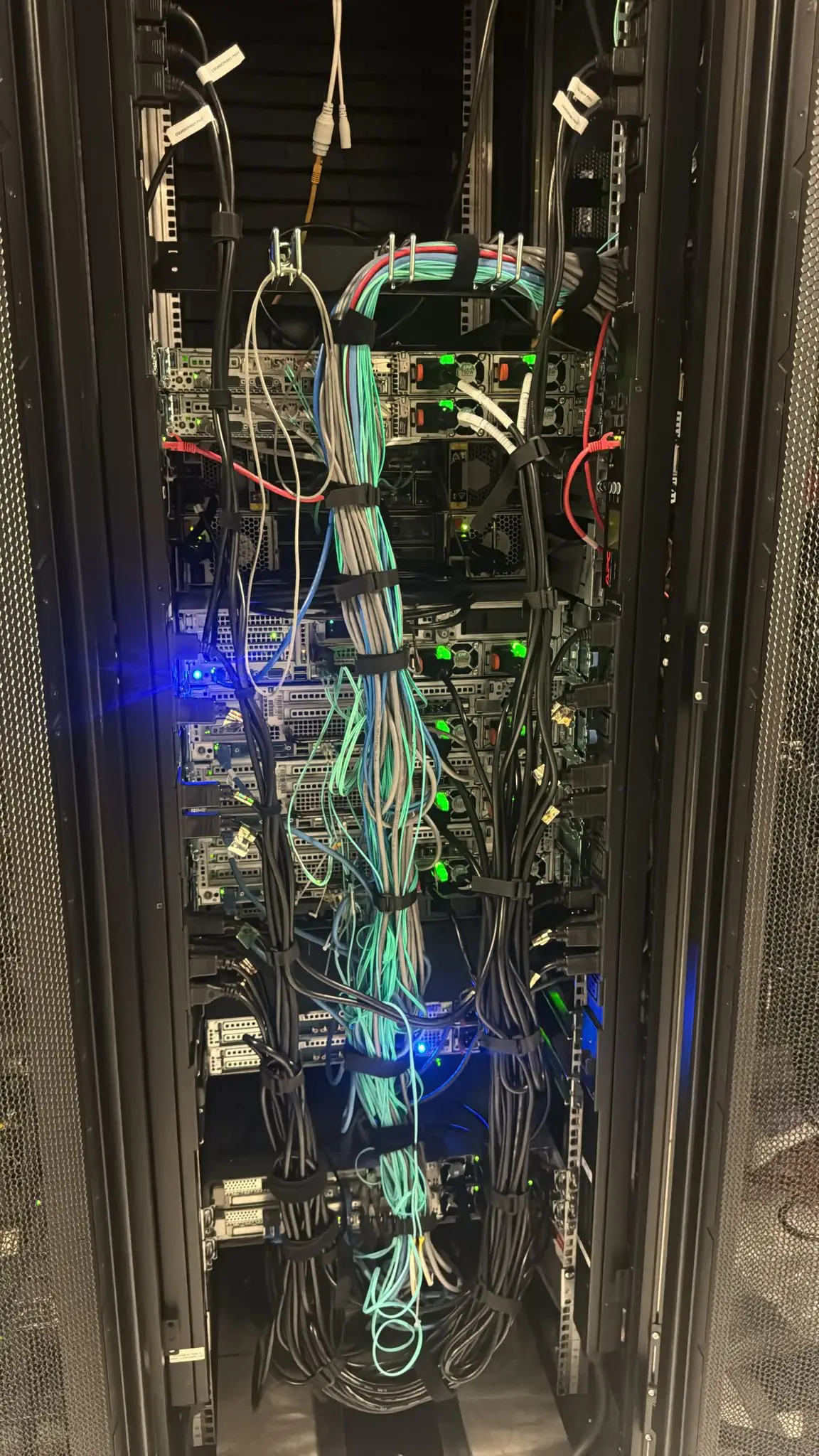
Most decommissions happen next to equipment that must keep running. Crews work rack by rack, clearing only what is in scope, labelled and signed off, without disturbing neighbouring infrastructure, and under escort where the facility requires it.
Our Data Centre Decommissioning Process
How Long Does a Decommission Take?
The length of a data centre decommissioning project depends on the number of racks, the access windows the facility allows, and whether drives are destroyed on the floor. A single row can clear in one visit; a full hall may run as a phased programme. We confirm the schedule in the plan, before anything is booked.
Asset-Level Accountability, From Rack to Report
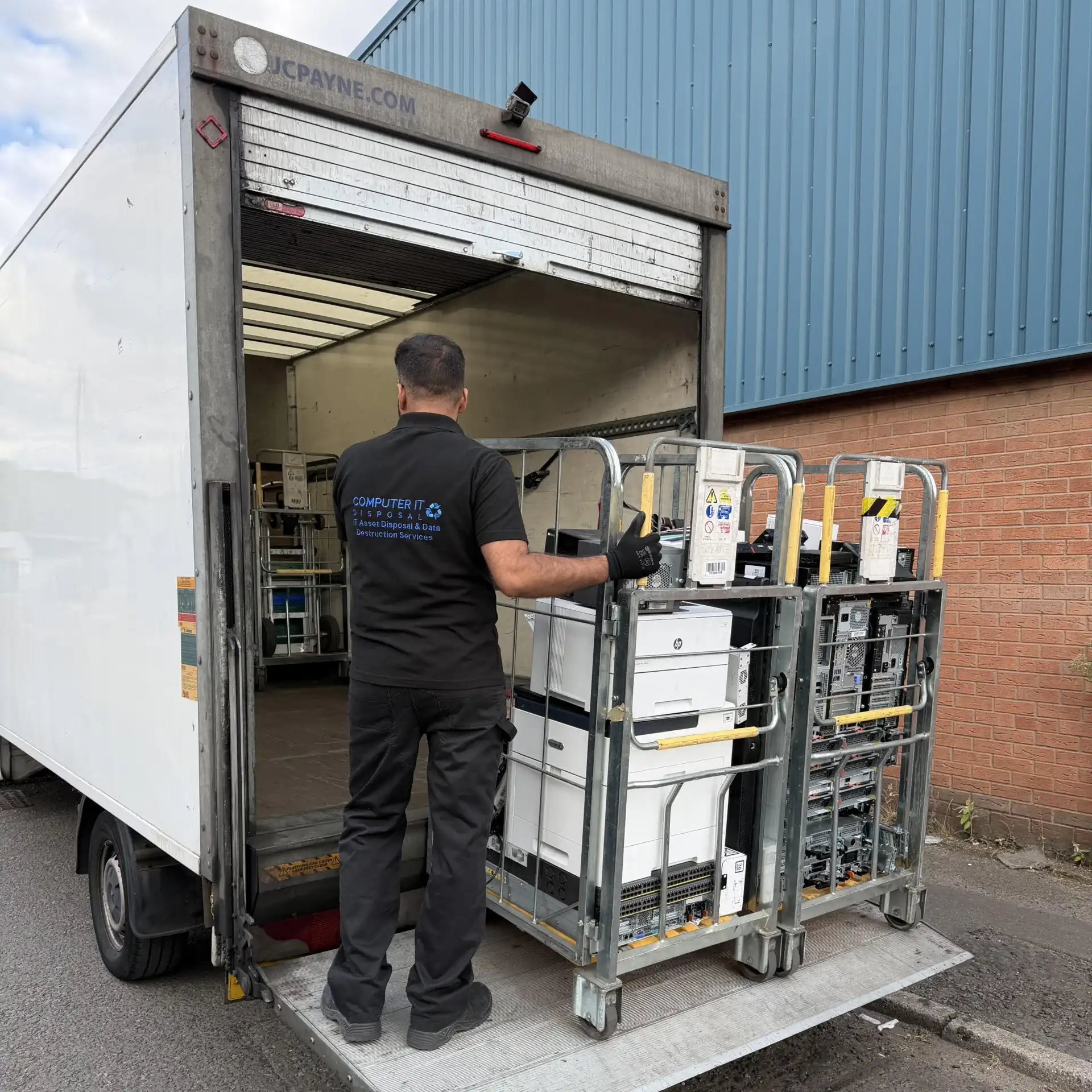
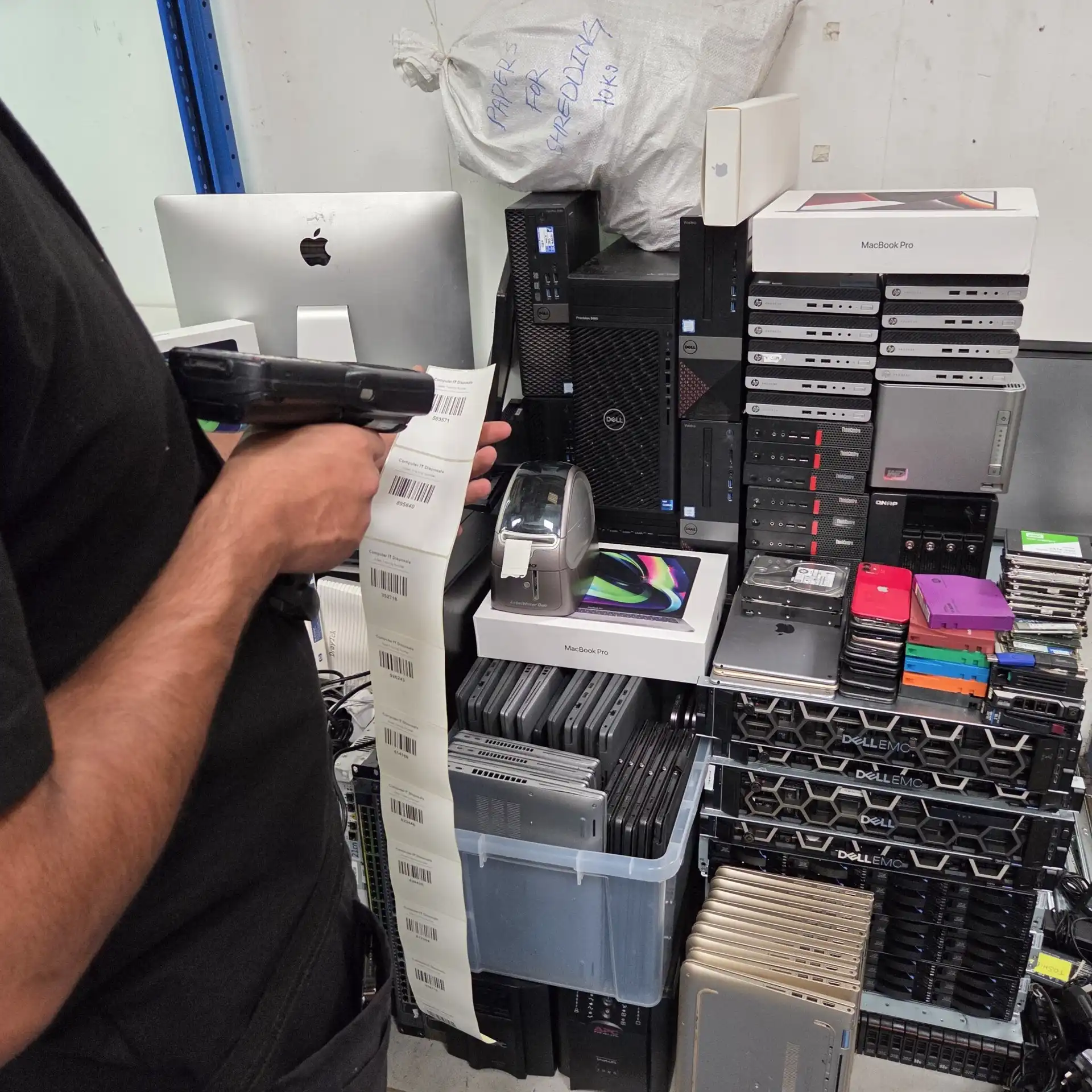
Every item is logged at the point of removal and recorded in our ITAD asset portal, visible to your team: make, model, serial number, asset tag, hard drive serial and grading. Equipment travels in locked cages and secure containers, in GPS-tracked vehicles driven by our own employed staff, never couriers or subcontractors, to our Environment Agency licensed facility.
The facility is alarmed, access-controlled and CCTV-monitored around the clock by an external security company. Within five working days you receive the full audit report with serials, your WEEE Certificate and Data Destruction Certificates, per device or consolidated, giving your compliance team a complete, verifiable record of the decommission.
Data Destruction on the Floor or at Our Facility
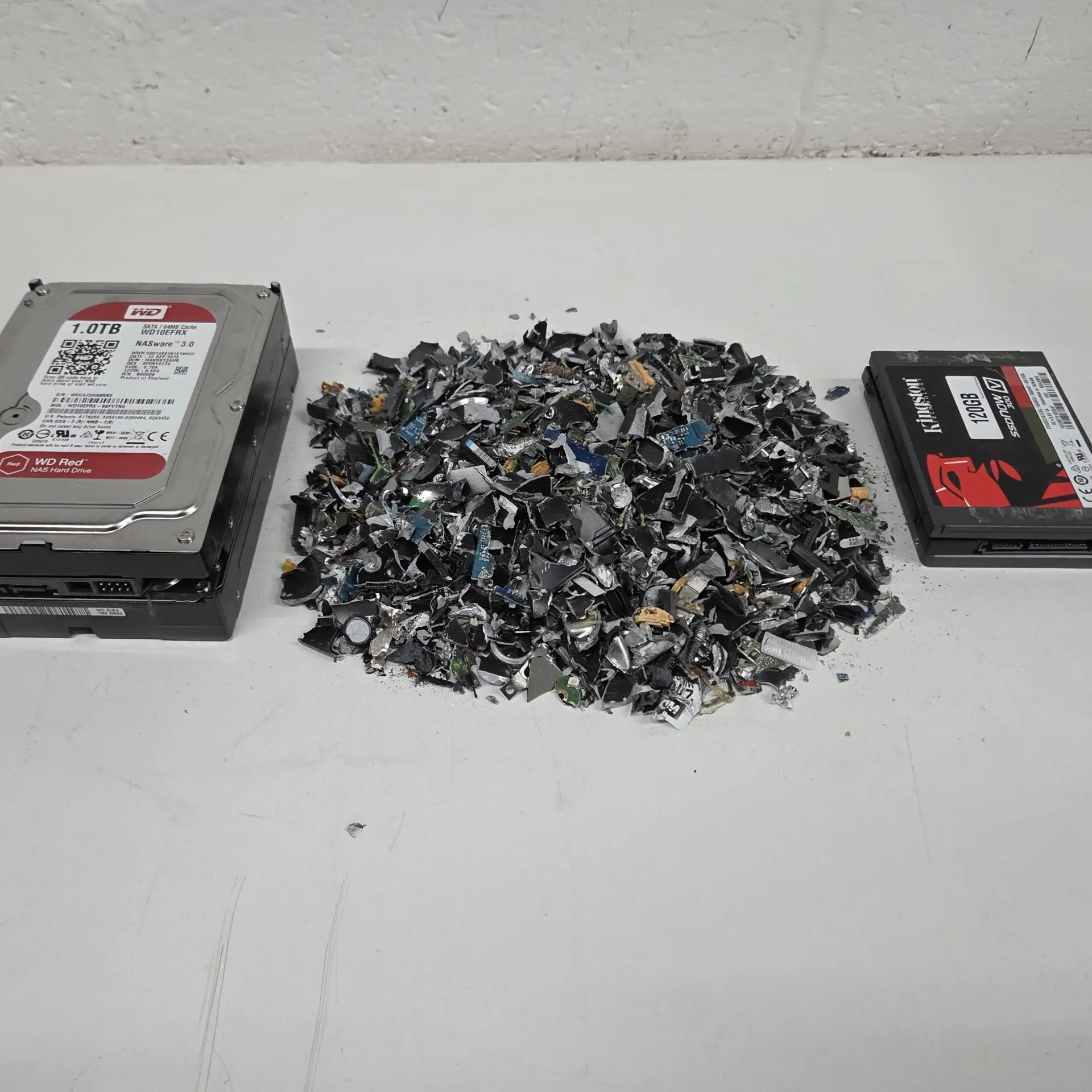
Data-bearing media can be destroyed on-site before anything leaves your building, or processed at our facility, to your policy. For facilities with strict media-control policies, on-site destruction means no live data ever passes your perimeter. Our team arrives with the destruction equipment, and on-site crushing is available for batches of under 500 drives.
Drives are erased to HMG IS5 or NIST SP 800-88 Rev 2 using Blancco’s ADISA-certified software, or physically destroyed in line with NCSC secure sanitisation guidance. Every method is recorded against the drive serial on your certificate through our certified data destruction service.
Witnessed Destruction for Strict Policies
Where your policy requires it, destruction can be witnessed on site at your premises, so your security team sees every drive destroyed and matched to its serial number. On-site work may carry a charge, which is agreed and approved before booking.
Drives, SSDs and Tape Libraries
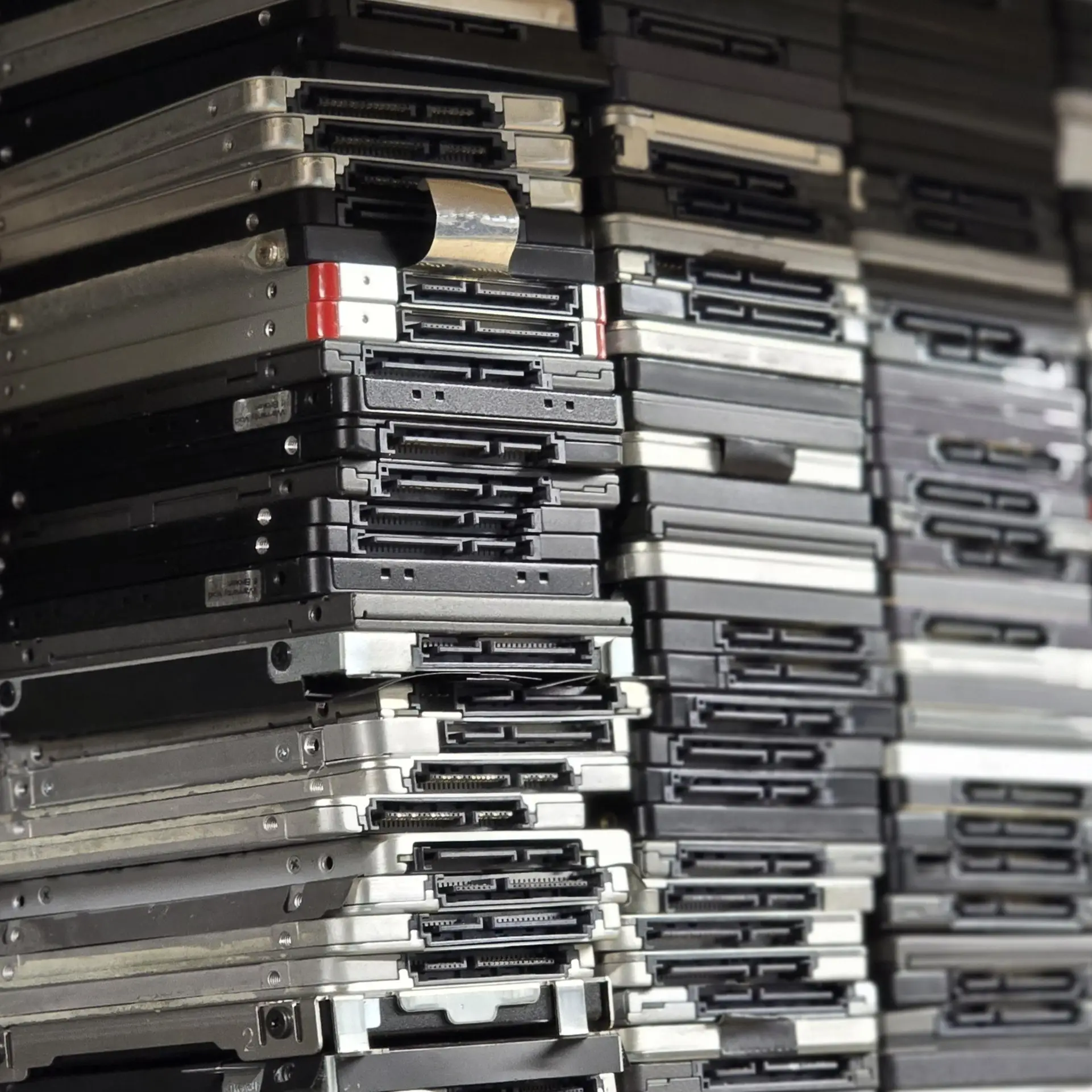
Each media type needs its own method. Hard drives are shredded to 6–8mm and SSDs to 2mm, LTO tapes to 10mm, and degaussing is available for magnetic media. Failed drives that can’t be erased go straight to physical destruction. See our hard drive shredding service for the detail on each method.
IT and Hardware Decommissioning Services
Data centre decommissioning is the largest form of IT decommissioning, but the same discipline applies to any hardware decommissioning project: a storage migration, a network refresh or a server decommissioning programme across branch sites. Each follows the same steps as a full hall: log, destroy, de-rack, remove and certify, at whatever scale the project needs.
Network decommissioning deserves particular care. Switches, routers and firewalls hold configurations, credentials and network maps, so they are wiped or destroyed and certified like any other data-bearing device, not treated as scrap metal.
Server Room and Comms Room Decommissioning
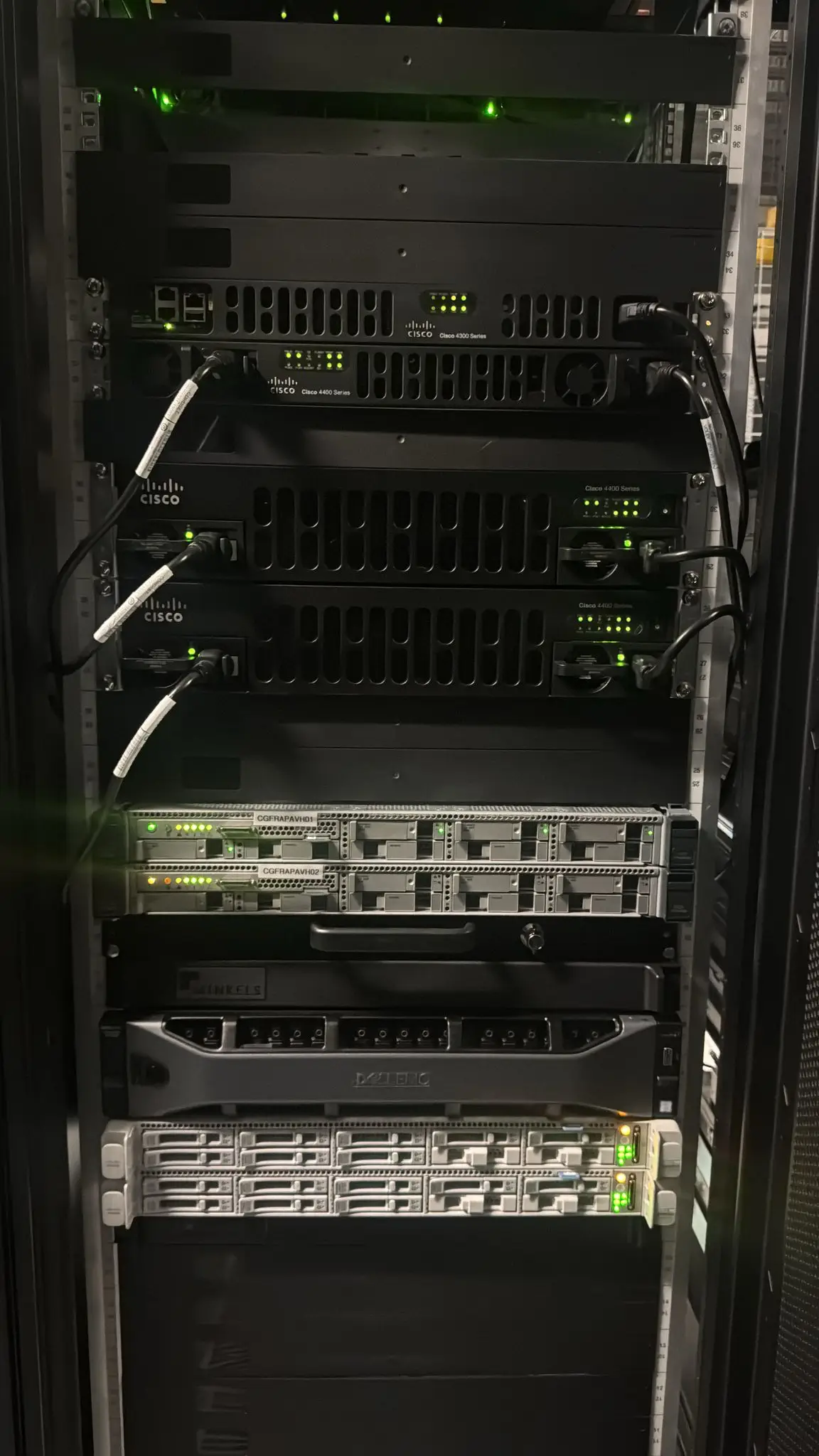
Not every decommission is a data hall. Server rooms in offices, comms rooms in branch networks and research clusters in universities need the same care at a smaller scale: logged assets, certified destruction and a clean hand-back. Server room decommissioning often sits inside an office move or a building hand-back, with a fixed date that can’t slip.
We clear the room, the racks, the cabling and the UPS, and collect the rest of the building’s IT on the same visit through our IT asset disposal service. Schools, colleges and universities can plan campus decommissions into vacation periods.
Overseas Operators: UK Decommissions Booked Remotely
US, European and Middle East organisations with racks in UK facilities book decommissions remotely, with no need to send their own team to the UK. Our certified and experienced crews handle the decommission end to end, working with the facility’s own operations team, and certification is delivered electronically. References are available if needed.
You follow progress through our ITAD asset portal and receive the same serialised audit report and certificates as a UK client, ready for your own compliance and audit processes.
US clients looking for data center decommissioning services in the UK get one point of contact, a crew already inducted at major UK facilities, and certification that fits their own audit process.
Value Recovery on Decommissioned Estates
Data centre refreshes often release equipment with genuine resale value. Working servers, networking and storage under two years old, or up to four years old in volume, may qualify for a rebate or an offset against the decommissioning cost.
Send us the asset list before the project and we’ll confirm what the estate is worth before a single rack moves. Equipment with no resale value is recycled under the WEEE Regulations, and any drive from resold equipment is erased and certified first.
Data Centre Asset Disposal
Equipment that can’t be resold goes through data centre asset disposal at our licensed facility: separated into material streams, recycled under the WEEE Regulations and recorded on your ESG Report, with 100% diverted from landfill.
Data Centre Decommissioning Checklist
A good data centre decommissioning plan answers these questions before the first rack is touched:
- Scope:which halls, rows and racks are in scope, and what stays live?
- Asset list:is there an up-to-date inventory with serial numbers to reconcile against?
- Windows:when can work take place, and what are the facility’s access and escort rules?
- Power-down:who powers down and disconnects each rack, and when is it signed off?
- Data policy:is destruction on-site or off-site, and which standard applies to each media type?
- Value:which equipment could be resold, and has it been assessed before removal?
- Evidence:which certificates and reports does your compliance team need at the end?
We work through this checklist with you as part of every data centre decommissioning plan, so nothing is left to the day of the move.
How to Choose a Data Centre Decommissioning Company
Data centre decommissioning companies vary widely. Before you appoint one, check four things. Are their crews directly employed and vetted, or subcontracted? Are they already inducted at your facility, or starting from scratch? Can they destroy data on-site, and certify every drive by serial number? And do they hold a waste carrier licence and process at a licensed facility, so the Duty of Care chain is unbroken?
We meet every one: our own BS 7858 vetted staff, inductions at major UK data centres, on-site destruction, serialised certificates, an Upper Tier Waste Carrier licence and an Environment Agency licensed facility. See our licences.
Data Centre Decommissioning and the Law
Under UK GDPR, your organisation stays responsible for personal data until it is destroyed, including data on drives in racks you no longer use. The hardware itself is electrical waste under the WEEE Regulations, and it must be handed only to a licensed carrier with a Waste Transfer Note under your Duty of Care.
UPS batteries and battery banks may be hazardous waste and travel under the correct consignment paperwork. Our process covers every obligation in one project, and our WEEE recycling service handles any other electricals from the same site.
Why Operators Choose Our Data Centre Decommissioning
Data Centre Decommissioning Across the UK
We provide data centre decommissioning UK-wide, across England, Scotland and Wales, including the main data centre clusters around London, Slough and Reading. London is our busiest area; see our London IT disposal service. For local details, choose your area:
Who We Decommission For
Colocation customers exiting a contract. Enterprises consolidating onto fewer sites. Managed service providers refreshing hosted platforms. Universities retiring research clusters. Public sector bodies moving services to the cloud. Each has different access rules and evidence needs; the process adapts to the environment, and the data centre decommissioning standard stays the same.






Frequently Asked Questions
Booking Form
Free collection available for qualifying items · certificates within 5 working days · 100% diverted from landfill.