

A Complete Guide on Data Destruction Methods for 2024

Losing data might be a nightmare for many, but when you own a business, there is a huge risk of misuse of your sensitive data. This is especially important when you are going for electronic recycling and IT disposal services. At some point, you need to get rid of all the old electronics that have been sitting in your office. Either the hard drives are filled with your information or the data of your clients that you cannot simply throw away. That is where data destruction comes in and this detailed guide on data destruction methods will help you deal with your old electronics responsibly.
Data lifecycle
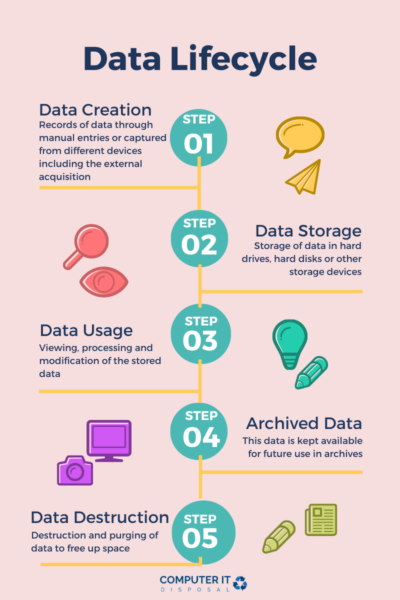
Data lifecycle management is important in order to manage the flow of data throughout its lifecycle. Every piece of data goes through certain stages that eventually end up in data destruction. Here are the steps of the data lifecycle.
-
Creation of data
This step involves the data that is recorded through manual entries or captured from different devices including the external acquisition.
-
Data storage
The data is stored in hard drives and hard disks or other storage devices. This step involves the security of data so it can be retrieved when needed. Basically, this step is to back up the data for later stage.
-
Usage
The third step is the usage of data that involves viewing, processing and modification of the stored data. You can either use this data to make an analysis or modify it further. Data sharing is also one aspect of the usage of your stored data.
-
Archived data
This is where data is kept in records that are archived. This data is kept available for future use.
-
Data destruction
The last step is to destroy data or perform purging to make the space available for new data. This step is also performed before sending off your old electronics for IT disposal or electronic recycling.
What is data destruction?
The archived data grows unavoidably and the storage devices fall short at some point. Storing your data forever is not feasible and that is where the need for data destruction emerges. The process of data destruction, also known as purging, involves the removal or deletion of every copy of the data from your record. This step comes after the data has passed its retention period and it’s time to get rid of it. This guide on data destruction methods will elaborate on the three choices you can make when choosing data destruction method and which one is the most effective.
Why is data destruction important?
With the ever-increasing reliance on digital information, secure data destruction has become crucial. While simply deleting data may seem sufficient, it can potentially be recovered through advanced techniques. Proper destruction methods permanently erase sensitive information, including financial records and personal details, rendering it unrecoverable. This protects individuals and organisations from the severe ramifications of data breaches, such as identity theft, financial losses, and damage to their reputation. Moreover, many data protection regulations enforce the implementation of secure data destruction practices.
-
To free up space
Your organisation can’t retain all the data over a certain level and at some point, you might need to free up space. There is a complete data lifecycle that is managed in organisation and as the last step, when the data is of no use, it is destroyed.
-
To save your sensitive data from misusage
The second reason is to keep your information safe from any intruder who might misuse all your sensitive information when you send off your IT equipment for recycling or disposal. It is an important step when disposing of your electronics in order to ensure safety and security.
Data destruction vs data disposal
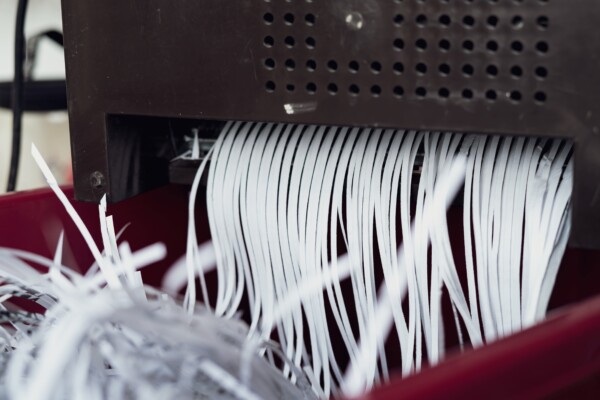
Data disposal is the process of getting rid of your data from the device but not deleting it entirely. There are always some traces of the data in the storage devices and that is not taken care of in terms of secure data disposal.
However, data destruction is performed by completely getting rid of the data without leaving any traces. It wipes the devices and cleans it up from any data so that any malicious individuals will not be able to get their hands on your personal information. This procedure ensures that data is unrecoverable because only deleting the data doesn’t mean that you have entirely got rid of it so you must dispose of data securely.
Data destruction methods
It is really important for every organisation to have a data destruction policy in order to keep their data secure and the information related to their clients safe.
When you are looking for different ways of data destruction, you must choose the one for you after consideration of some important factors mentioned in this guide on data destruction methods.
Factors affecting your choice of data destruction methods
- The type of data stored
- Type of devices with data
- The level of sensitivity of data being destructed
- Value of data assets
- Legal requirements for the company to follow
In terms of data destruction, there are some data erasure methods that are somehow to a lower extent and mostly involve sensitive document disposal procedures. Others involve physical destruction of the storage devices to ensure permanent and secure data removal. Here are some widely used types of data destruction methods.
1. Delete/ Wipe
This method of clearing the data basically involves deleting it all. It is a commonly used method where the devices are reused in your own organisation and you are just clearing up some space. The data deleted through such a process can be easily retrieved. This process is suitable for data destruction before recycling but not if there is sensitive information on the devices. Keep reading this guide on data destruction methods to find out the methods that will work best for you.
2. Overwriting
Overwriting is more of a second step to the deleting method. By clearing the information available, you can make it unrecoverable if you clear the traces and replace it with some more data. You can just use some dummy data to fill up the space again and delete it once so that the original data cannot be traced back. This way, if your data remains on your storage devices even after you try to erase it, you can go for this data destruction method as it allows better security.
A pattern of 0s and 1s replaces the original pattern and this way the original once cannot be accessed anymore. You can either use a random pattern or a specific one that can be eventually used to verify if your devices have been overwritten and wiped. Overwriting is an acceptable option but the credibility is not as high as the other three in this guide on data destruction methods.

Advantages and Disadvantages of overwriting
For
Data overwriting is a really simple and easy to perform data destruction method that only uses simple data erasure software or manual deletion and entrance of new data. This reason makes it a widely used method that is popular because it can be performed by the organisation itself and doesn’t necessarily need data destruction services. However, if the number of devices exceeds a limit, you can always get sensitive document disposal services from a local service provider such as CITD.
Passing all that information through a single overwriting step is enough to remove the data permanently but if the level of sensitivity is higher and you want to be sure that the data is not accessed in the future, you can use multiple wipes. Any shadow bits that might be present in the storage will be eliminated in further steps and bring you peace of mind that your data is safe.
Overwriting can be targeted by data erasure software that will only clear specific data or files without harming the other data. It can either be used to clear targeted files due to their sensitivity or to clear up the storage space in your device. It will maintain security of your sensitive information and free up some space for new data.
Against
It may take a lot of time, especially if you are overwriting some huge storage device. Also, you rewrite a license for the overwriting of each hard drive and that step cannot be avoided. Your assurance process must be high quality and performed in host protected areas unless the data erasure software that you are using has ensured sanitisation of the areas.
You can only use the overwriting method if your data is not damaged and can be rewritten. If the data is degraded, you will have to go for options of physical destruction mentioned in detail in this guide on data destruction methods because overwriting will not be effective anymore.
3. Degaussing
This is a technical data destruction method that involves usage of strong magnetic fields to disrupt the data present on hard disks and magnetic tapes. After this method, the hard drives are destroyed through the above-mentioned physical destruction to ensure that the data is inaccessible for any third party. It is a quick method to destroy large amounts of data from any hard drive and an efficient choice in this guide on data destruction methods.
Advantages and Disadvantages of degaussing
For
Degaussing is a quick method that makes data unrecoverable so it is the best way to deal with sensitive data. It saves your company from utilising resources for overwriting after erasure of data and thus saves time and manpower. This method is safe from any data recovery software and thus keeps your information secure.
Against
However, degaussing possesses some major disadvantages as well. The hard drives are not reusable after degaussing process as they were in overwriting. This is because degaussing destroys hard drive equipment. This method will not work if you are using it for a laptop, mobile or PC.
To ensure if all the data is destroyed or not, there is only one way and that is a costly method of forensic checking. Electronic scanning of the hard drives through microscopes is the way to see if the degaussing worked or not and that is a really expensive method to opt for data destruction. Keep reading this guide on data destruction methods to find the best option available for you.
4. Physical data destruction
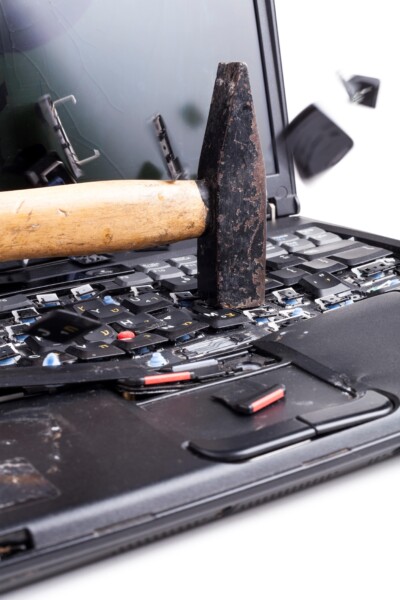
Physical destruction of data seems like a suitable process for the highest level of security and it not just involves pounding your old laptop with a hammer. There are a number of physical destruction methods that can be effective for businesses to get rid of their old data. It involves shredding, melting and pulverising the hard disks so that the information cannot be recovered. Such hd destruction services ensure that the disk will not be operable after the procedure.
High powered equipment is used to physically destroy and perform hard drive shredding. However, with evolving technology, it is even possible to retrieve data from destroyed devices so you must make sure that you are getting hard drive shredding services that will be dividing it into pieces that will not allow any data recovery and ensure security. To make physical data destruction more effective, you can combine this method with overwriting and data erasure method and increase the level of security. This is one of the best and most trustworthy choices in this guide on data destruction methods.
Hard disk disposal Advantages and Disadvantages
For
If done in the right way, physical destruction is the most promising method to get rid of any traces of your data when paired with erasure and overwriting. This method gives the highest assurance of data disposal out of all in this guide on data destruction methods and there is almost no chance of retrieving the data back from the shredded pieces. This is how to dispose of confidential documents and get rid of the evidence.
Against
It is a really costly method because heavy machinery is required to perform the task. You can go for this method only for the highly sensitive information and not with the usual computers. Physical data destruction also contributes to electronic waste unless it is melted and reused for other purposes so it has the potential to be harmful for the environment.
Where to get the best data destruction service?
For the best data destruction services, you can get help from Computer IT Disposals that offers high quality IT recycling, disposal and data destruction services all around the UK. You can get efficient hd destruction services for hard drives with highly sensitive information and make it inaccessible for any third party. Our goal is to dispose of data securely so that you don’t have to worry about any data breaches in your company.
Conclusion
There are different types of data destruction methods that vary depending upon the needs of the organisation and the devices or data that are to be destroyed. Data destruction will not just keep your data safe but also that of your clients. Hopefully this guide on data destruction methods has provided you with an insight into different types of destruction of data and which one is suitable for your organisation. You can dispose of data securely with CITD so contact now and get our services.
Booking Form
Free collection available for qualifying items · certificates within 5 working days · 100% diverted from landfill.