

Monitor Recycling & Screen Disposal for UK Businesses
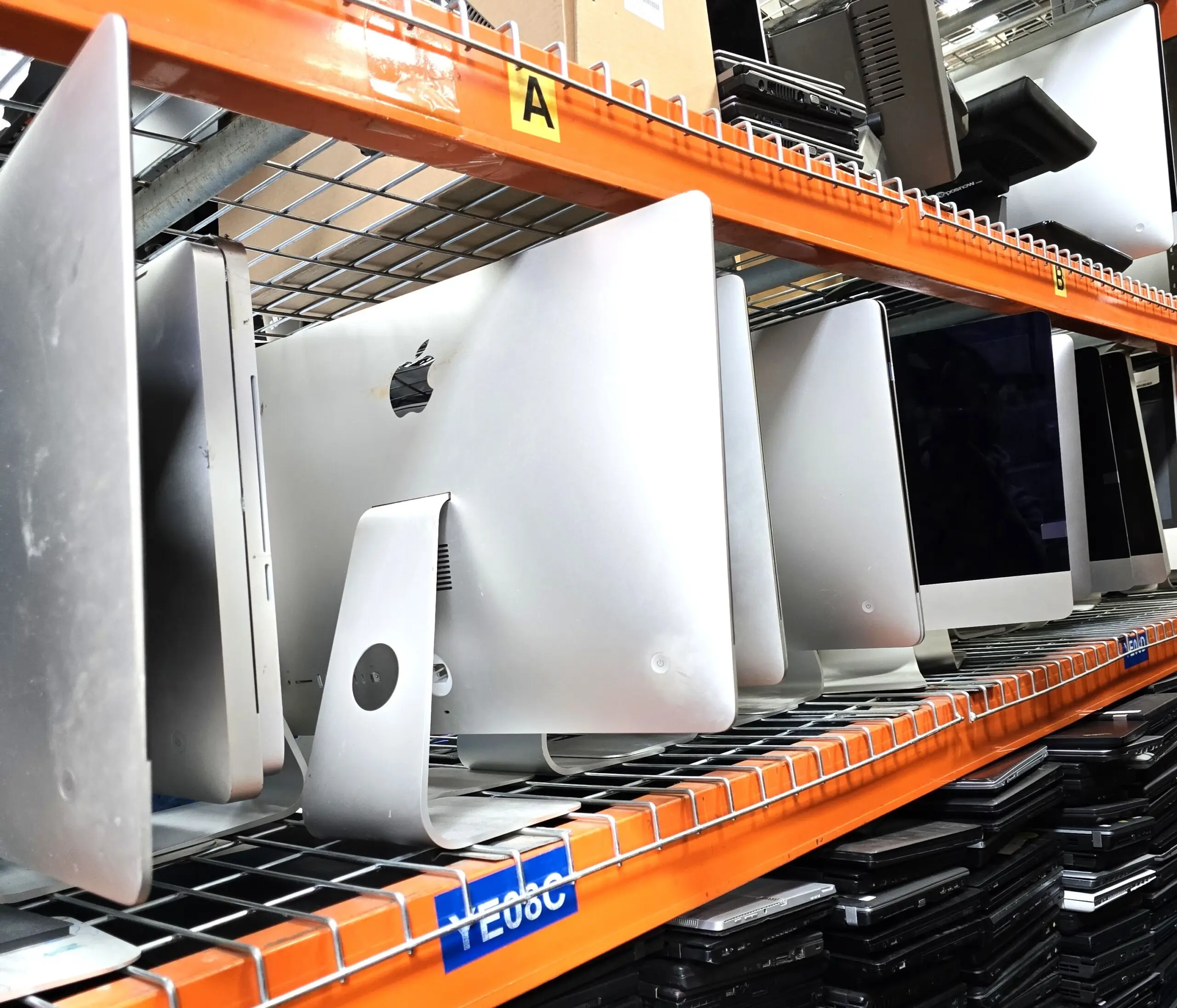
Screens multiply quietly. Every desk gained a second monitor, every meeting room a TV, every reception a digital signage display and every training room a smart whiteboard. Somewhere in a storeroom, the CRT monitors nobody knew how to get rid of are still waiting.
Computer IT Disposals provides secure monitor recycling for businesses across England, Scotland and Wales: desktop monitors, TVs, smart screens and CRTs collected and recycled under the WEEE Regulations, hazardous screens moved under the correct paperwork, data on smart displays destroyed and certified, and a full compliance pack within five working days.


Monitor Recycling At A Glance
- What it is:Business monitor recycling is the compliant collection and recycling of monitors, TVs and display screens, with hazardous screens handled correctly and any stored data destroyed.
- Who provides it:Computer IT Disposals (Commercial IT Recycling Ltd) provides monitor recycling to UK businesses. Established 2014, processing at an Environment Agency licensed facility in Nottingham.
- Scope:Desktop monitors (LCD and LED), meeting room TVs, wall-mounted screens, smart whiteboards and interactive flat panels, digital signage, video-wall panels, plasma screens, and CRT monitors and TVs.
- Cost:Flat-screen monitors travel with qualifying IT collections at no extra charge. CRT, plasma and large interactive screens are chargeable, quoted per unit and agreed before booking.
- Data:Smart screens, interactive boards and signage players that store files, credentials or accounts are treated as data-bearing.
- Evidence:WEEE Certificate, Data Destruction Certificate where data-bearing screens were processed, hazardous consignment notes where required, ESG Report and Asset Audit within five working days.
What Is Business Monitor Recycling?
Monitor recycling is the safe, legal route for screens a business no longer needs. Every monitor and TV is electrical waste under the WEEE Regulations, so it must go to a licensed facility where glass, plastics, metals and circuit boards are separated and recovered. Some screens also contain hazardous materials, and some store data.
Professional computer monitor disposal deals with all of it in one visit: standard screens are recycled, hazardous screens travel under the right paperwork, data-bearing displays are wiped or destroyed and certified, and you receive documents proving each step.
Whether it’s a stack of old monitors from one office or every screen in a building, the process is the same, and computer monitor recycling through one provider keeps your audit trail in one place.
Can You Put a Monitor in the Bin?
No. Monitors and TVs are electrical and electronic equipment, so they can’t go in general waste, a skip or a mixed recycling bin. Businesses must hand them to a licensed waste carrier and keep a Waste Transfer Note under their Duty of Care. Cracked and broken screens are still WEEE, and CRTs are hazardous waste on top.
Screens and Displays We Recycle
Our screen recycling covers every make and size, working or broken, boxed or still on the wall:
| Screen type | Examples | How it’s handled |
|---|---|---|
| Desktop monitors |
|
Recycled; travel free with qualifying collections |
| Meeting room TVs |
|
Smart TVs treated as data-bearing; de-mounting by arrangement |
| Smart whiteboards |
|
Data-bearing; large units chargeable |
| Digital signage |
|
Media players treated as data-bearing |
| Video walls |
|
Planned removal; counted panel by panel |
| CRT monitors and TVs |
|
Hazardous stream; chargeable |
| Plasma screens |
|
Specialist handling; chargeable |
How to Dispose of Old Monitors
If you’re working out how to dispose of old monitors as a business, the legal route comes down to five checks:
- Sort the screen types.Flat-screen monitors, CRTs, plasma screens and smart displays each follow a different stream, so a rough count of each helps.
- Check for stored data.Smart TVs, interactive boards and signage players hold accounts, credentials and files. Treat them as data-bearing devices.
- Use a licensed waste carrier.Check the carrier’s Environment Agency registration before any screen leaves your site.
- Get the right paperwork.A Waste Transfer Note for standard screens, plus hazardous waste consignment notes where CRTs or other hazardous screens are included.
- Keep the certificates.A WEEE Certificate and, where data was involved, a Data Destruction Certificate complete your audit trail.
Our monitor recycling service covers every one of these checks in a single collection, whether you need to dispose of a computer monitor or two from a small office or clear every screen across a multi-site estate.
Why Not Take Monitors to the Tip?
Household recycling centres are built for residents, and most don’t accept business waste. They won’t issue a Waste Transfer Note in your company’s name, and nobody there will wipe or certify the data on a smart screen. For a business, that leaves a gap in the Duty of Care record, and a CRT left in the wrong skip becomes a hazardous waste problem.
Computer Monitor Recycling for Office Refreshes
Desktop monitors are the bulk of most monitor recycling collections. When a floor moves to new screens, or dual-monitor desks become a single ultrawide, the old monitors come off in their hundreds, along with stands, docking stations, cables and power leads. We count them onto your paperwork, secure them for transport and recycle them at our licensed facility.
Modern flat-screen monitors travel free alongside qualifying IT collections, so the simplest monitor recycling route is to clear them with the computers they sat beside. Collections can be scheduled for a specific date to fit an office move, refurbishment or IT refresh.
Computer monitor disposal at this scale needs planning, not a van and a guess. We agree the count, the access and the collection date in advance, so screens leave in one trip where possible and your facilities team isn’t left with a half-cleared floor.
Old Computers and Monitors in One Collection
Old computers and monitors usually retire together, and they should leave together. Desktops, laptops and servers make up the qualifying volume for free collection, typically 20 or more items, and the monitors ride along at no extra charge. Hard drives from the computers go through certified data destruction, and everything is recorded under one reference through our computer recycling service.
CRT Monitor Recycling and Disposal
CRT monitors and TVs are the storeroom legacy most offices still have. They contain leaded glass and phosphor coatings, so they need specialist processing, dedicated handling and hazardous waste consignment paperwork. Working or broken, boxed or loose, one collection takes the lot.
CRT recycling is a chargeable service. The charge reflects real processing and handling cost, it’s quoted per unit up front, and it’s agreed by you before anything is booked. In return, the screens leave your building legally, fully documented and off your compliance risk register for good.
Are CRT Monitors Hazardous Waste?
Yes. CRT screens contain leaded glass, and GOV.UK’s WEEE classification guidance lists CRT and flat-screen displays containing persistent organic pollutants (POPs) as hazardous waste. Many older flat screens also have mercury-containing backlights. We classify each consignment, prepare the hazardous waste paperwork where it’s required and count everything onto your documents.
Plasma and Large Interactive Screens: The Honest Version
Some screens cost real money to process, and it’s fair you know which and why. Plasma screens are heavy, fragile and contain materials that need careful processing of their own. Large interactive smart screens and whiteboards combine size, weight, wall de-mounting and data-bearing electronics in one unit.
Both are chargeable, alongside CRTs. Charges are quoted per unit, and a photo of the storeroom is usually enough for us to advise. Modern desktop monitors and standard flat screens carry no such charge.
TV Recycling for Businesses
Our TV recycling service covers the screens businesses actually run: boardroom and meeting room TVs, wall-mounted displays in receptions and canteens, hotel and hospitality room screens, and TVs from training suites and staff areas. Wall-mounted units can be de-mounted by arrangement, including bracket and mount removal, with the crew and time planned when you book.
Smart TVs hold Wi-Fi credentials and app logins, so they are treated as data-bearing devices, not just glass and plastic. Hotel and hospitality refreshes are counted room by room onto your paperwork, so every TV disposal is accounted for.
How to Dispose of a TV from a Business
For a business, disposing of a TV follows the same rules as any screen: a licensed carrier, a Waste Transfer Note, and data cleared from smart models. Book TV recycling with the rest of your IT and the TVs travel on the same paperwork. Large or wall-mounted units are planned in advance.
This television recycling service is set up for businesses and organisations. Home users can contact us about a chargeable collection.
Smart Screens, Interactive Whiteboards and Digital Signage
An interactive whiteboard holds saved lessons, meeting notes and logged-in accounts. A meeting room smart TV holds Wi-Fi credentials and app logins. A signage media player is a small computer with your content and network settings on it. Screens don’t get a pass on data just because they hang on walls.
Every data-bearing screen goes through our certified data destruction process before the hardware is recycled, with the method recorded on your certificate. SMART Board, Promethean and Clevertouch panels are regular collections from classrooms, training suites and boardrooms.
Whiteboard Replacement Programmes for Schools
Schools, colleges and universities often replace interactive boards over the summer holidays. We schedule collections to fit the programme, room by room or site by site, with de-mounting by arrangement and one set of paperwork for the whole estate.
Wall-Mounted Screens and Video Walls
Screens still on the wall are no problem for our monitor recycling crews. De-mounting can be arranged as part of the collection: tell us when booking and we’ll plan the crew, equipment and time. Video walls are counted panel by panel, with controllers and media players treated as data-bearing, and the whole installation is documented under one collection reference.
Large fit-outs, where every wall screen and desk monitor changes at once, run alongside your wider IT asset disposal collection: one visit, one reference.
Computer Screen Recycling for Every Sector
Screen collections look different in every sector. Offices clear desktop monitors by the floor. Schools, colleges and universities swap interactive boards on a programme. Hotels and hospitality groups refresh room TVs property by property. Retail and leisure estates replace digital signage and the media players behind it. Healthcare and public sector sites retire monitors from clinics, control rooms and back offices.
Whatever the mix, our computer screen recycling service runs to one standard: a planned collection, data-bearing screens certified, hazardous screens consigned correctly, and one compliance pack for your records. Monitor recycling for a single office and for a national estate follows the same process.
Is Monitor Recycling Free?
Modern flat-screen monitors are collected alongside your other business IT at no extra charge on qualifying collections. Monitors and screens don’t count towards the free collection qualifying volume itself, which is based on items such as desktops, laptops and servers, typically 20 or more.
CRT monitors and TVs, plasma screens and large interactive smart screens are chargeable because of the specialist processing and handling they need. Monitor-only collections are assessed individually. Any charge is agreed and approved by you, or your finance team, before anything is booked.
What Affects the Cost of Monitor Disposal?
Where a charge applies, it depends on practical things: the number of CRT, plasma and large interactive screens, whether screens need de-mounting, access at your site (stairs, lifts and loading bays), and whether the screens travel with a qualifying collection. Send us a list or a photo and we’ll confirm the cost of your monitor recycling before anything is booked.
How Monitor Recycling Works
Monitor Disposal and the Law
Monitors and TVs are electrical waste, so they must be recycled under the WEEE Regulations and handed only to a licensed carrier with a Waste Transfer Note under your Duty of Care. Hazardous screens, such as CRTs, must move under consignment paperwork, which we prepare and complete for you.
If a smart screen, interactive board or signage player stores personal data, UK GDPR applies too: your organisation stays responsible for that data until it is destroyed. Our WEEE recycling service handles any other electricals from the same site.
Why Businesses Choose Our Monitor Recycling Service
What Happens to Your Screens After Collection?
Screens travel with our own directly employed team, in locked cages and GPS-tracked vehicles, to our Environment Agency licensed facility in Nottingham. We never hand them to third-party couriers, and every item is logged against your collection reference.
At the facility, data-bearing smart screens and media players are dealt with first. Hazardous screens go into their own stream for specialist processing, and the rest are separated into material streams such as glass, plastics, metals and circuit boards for recovery. Your ESG Report then quantifies what was recycled and diverted from landfill.
The facility is alarmed, access-controlled and CCTV-monitored around the clock by an external security company, so your screens and the data on them stay secure from collection to certificate.
Your Compliance Pack
Every monitor recycling collection ends with one pack under a single collection reference, within five working days of processing. The pack includes a WEEE Certificate, which confirms your screens were collected and processed under the WEEE Regulations; a Data Destruction Certificate, which records the method used for each data-bearing screen, where these were processed; hazardous consignment notes, which are included where CRTs or other hazardous screens were collected; an ESG Report, which quantifies what was recycled and diverted from landfill; an Asset Audit, which lists logged items by make, model and serial number where required; and a Waste Transfer Note, which is your Duty of Care record, signed digitally on our ITAD management system.
Monitor Recycling Across the UK
We provide monitor recycling UK-wide, across England, Scotland and Wales. London is our busiest area; see our London IT disposal service. For local details, choose your area:






Frequently Asked Questions
Booking Form
Free collection available for qualifying items · certificates within 5 working days · 100% diverted from landfill.