

The Alarming Reality: Why Nearly Half of Young People Haven’t Recycled Their Phones
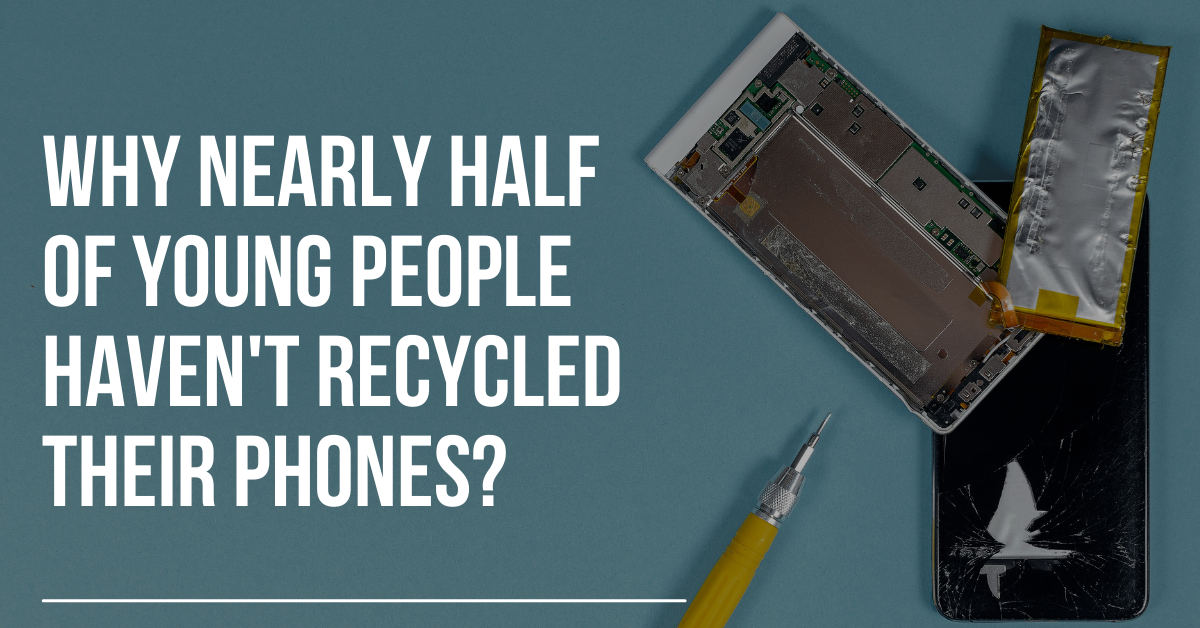
The world discards millions of devices yearly as they become outdated or break. Most people just throw them away, which is extremely dangerous for the environment. Throwing computers and mobiles in landfills contaminates the soil and water and brings many health risks to the human population.
So, disposing of mobiles, computers, and other electronic devices is paramount. We should either dispose of it properly or recycle it.
Considering the waste risks, the UK Government has set some goals. If achieved, zero e-waste would be going to landfills by 2030. But equally shocking is the fact that nearly 45% of young people never recycle their phones.
Spreading awareness about mobile phones recycling among UK children and teenagers is the need of the hour. It must be addressed on a priority basis to achieve the goal. Also, as a country, the UK generates the second-highest amount of e-waste per capita globally, with 23.9 kg.
Landscape of electronic device usage among UK youth
According to a report by NBI, almost half of UK children (52%) have access to digital devices. When it comes to teenagers (16-17), 98% own a smartphone. Guardian News claims that every one in five UK children has a personal smartphone at the age of four. This huge device ownership has a direct relation with e-waste generation.
Only in the year 2020 did the UK discard 24.9 million mobile phones. No wonder the UK is also a leading country exporting e-waste to developing countries. So, the massive e-waste generation that results from increasing device ownership also impacts other nations.
However, the government has taken many initiatives to control the situation. One is the Waste Electrical and Electronic Equipment (WEEE) Directive. Its purpose is to regulate the management and disposal of e-waste.
They aim to ensure the proper recycling of at least 85% of e-waste. Every business is legally bound to comply with WEEE regulations. Even if you recycle one million mobile phones properly, you can recover vast amounts of valuable metals. The chart below further clarifies the situation.
| Metal | Amount Recoverable After Recycling of 1 Million Mobile Phones |
| Copper | 16 tonnes |
| Silver | 350 kilograms |
| Gold | 34 kilograms |
| Palladium | 15 kilograms |
Uncovering the barriers to mobile phones recycling in the UK
Then, what are the hurdles that come across the way? Why do so many people never get to recycle their phones? Let us review the fundamental problems one by one.
Lack of awareness specific to the UK
Limited knowledge about the e-waste problem
So much must be done to raise awareness. Over two-thirds of households hoard up to 60 items of old, unused tech. almost one-third of UK adults have little or no knowledge about recycling and its importance. They do not know how to recycle mobile phones and where to recycle mobile phones.
While millennials are the most tech-aware generation, only 31% claim to understand the importance of recycling. This shows the majority of the UK population has no idea about the horrible impacts e-waste has on the environment. Mobile phones recycling is more than just necessary.
Low awareness of recycling options and programs in the UK
When the public does not understand recycling, they also do not know about country-wide recycling options. A 2019 Material Change Fund report found that many householders were unaware of how they could recycle electrical items. That shows a lack of knowledge about recycling options.
Environmental consequences of not recycling phones
Specific impacts on the UK environment
Dangers that e-waste causes are much more than those of regular waste.
Pollution from improper disposal methods in UK
The first thing is contamination. Improper disposal contaminates air, water, and soil. Some materials used in electronic devices are hazardous. Nickel, lead, mercury, and Lithium are some examples.
Unfortunately, improper disposal methods are common in both developed and developing countries. Open-air burning and acid baths are the most common inappropriate but heavily practised methods. They both result in toxic materials getting into the environment. A polluted environment is harmful to humans as well as animals.
British Medical Bulletin report says the raised incidence of low birth weight births has been related to residence near landfill sites. They also found that people living in those areas had issues like diarrhoea, chest pains, and even cholera.
Resource depletion and energy consumption affecting the UK’s sustainability goals
One may ask, what if I do not throw away my old phone but keep it in the cupboard? Well, that phone may not damage the environment, but from another perspective, it will. That perspective is known as resource depletion.
All electronic devices are made up of metals. These metals are extracted from the earth through mining. Mobile phone recycling ensures that those natural resources do not deplete. If you pile up your employees’ outdated computers in a separate room, you are wasting natural resources.
Initiatives and solutions tailored for the UK
The ambitious goal of zero landfill waste till 2030 shows how actively the UK government works on it.
Overview of UK government policies and regulations on e-waste management
The most crucial step, as we know, is the WEEE Directive. It aims to ensure that at least 85% of waste is recycled. Another great initiative is mandatory digital waste tracking, which will be introduced in 2025.
Mandatory digital waste tracking envisions making real-time tracking of waste possible. It will also provide a comprehensive way to see what is happening to the waste produced in the UK.
Corporate responsibility in the UK
Tech companies need more computing devices for work. Their responsible behaviours can make a significant impact. They can also play a role in spreading awareness. The general audience tends to listen more to tech companies about such topics.
If a travel company emphasises the importance of mobile phones recycling, the audience won’t take it seriously. If Apple says the same thing, people will start following.
A lot of green companies are working in the UK. British Chambers of Commerce and the Federation of Small Businesses offer detailed guides to smaller businesses about green practices. There are many organisations like carbon trust who work on reducing carbon emissions.
Educational campaigns in the UK
Smartphones are the major contributors of e-waste. Younger generation is their prime user. It is critical to make smartphone users aware of environmental problems of improper disposal.
The same news source that reported half of youth not recycling mobile phones revealed another shocking stat too. Almost half of the people who recycle mobile phones and hand them over to recyclers, did not believe their item was recycled. Mobile phones recycling is critical also because they contain a lot of precious metals. It is critical to address such trust issues of the prime users of the smartphone and encourage them to recycle their old mobile phones.
Belfast City Council runs many recycling events and workshops to help schools, community groups or businesses reach recycling goals. All their workshops are free to attend so other councils in the UK can follow their example and setup something similar for their residents.
Conclusion
Half of the youth of the UK being unaware of mobile phones recycling is an alarming situation. Addressing this issue on an urgent basis is the need of time to stop the tsunami of e-waste and its terrible impact on human health.
If one of us is not safe, none of us is safe. National and global causes need collaboration of masses. Policymakers, communities, and businesses must come out to make everyone in the UK realise the gravity of the e-waste problem. Individuals easily learn when institutions make them learn. The E-waste crisis is collective responsibility.
Are you also looking for someone to recycle your old phone? ComputerIT Disposal is one of the leading UK companies, who is accredited by the environmental agency and registered with ISO 14001.
Booking Form
Free collection available for qualifying items · certificates within 5 working days · 100% diverted from landfill.