

How to Choose an IT Disposal Company: 5 Reasons UK Businesses Choose CITD
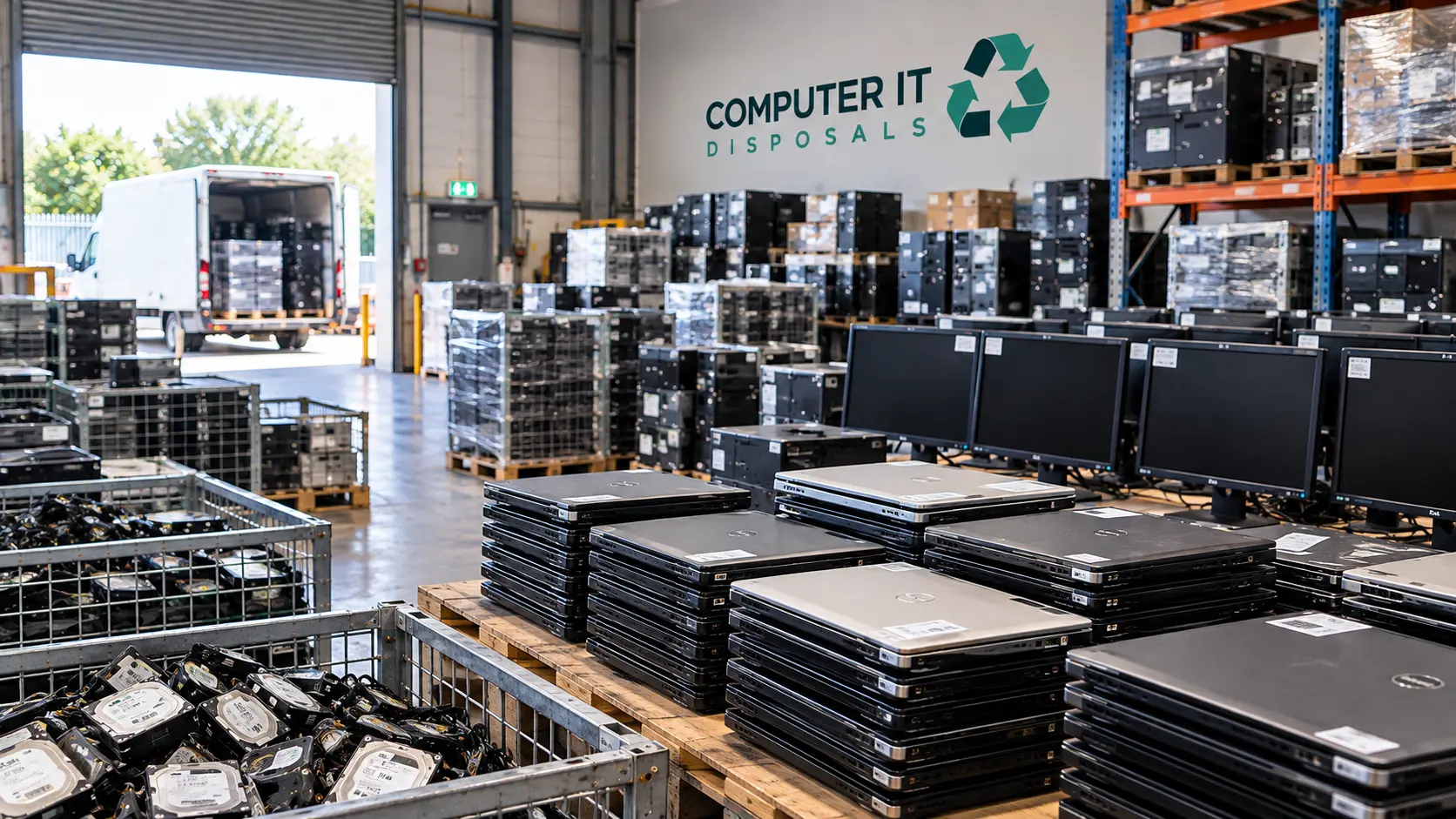
Quick answer: To choose an IT disposal company, check five things before you book. Is it registered with the Environment Agency to carry your waste? Can it prove data destruction with certificates listing every serial number? Does its own vetted staff handle your equipment from collection to processing? Does it reuse and recycle rather than landfill? Is the price and paperwork clear in writing? Computer IT Disposals meets all five for UK businesses, schools and public-sector organisations.
Choosing an IT disposal company is a compliance decision, not just a logistics one. Under UK GDPR your organisation stays responsible for the data on every device it gets rid of. Under the waste duty of care, you must pass waste only to someone authorised to take it. The wrong provider can leave you with a data breach or a waste offence, and no paperwork to show you did things properly.
This guide sets out the five checks we would make ourselves, how to verify each one, and how Computer IT Disposals (CITD) meets them.
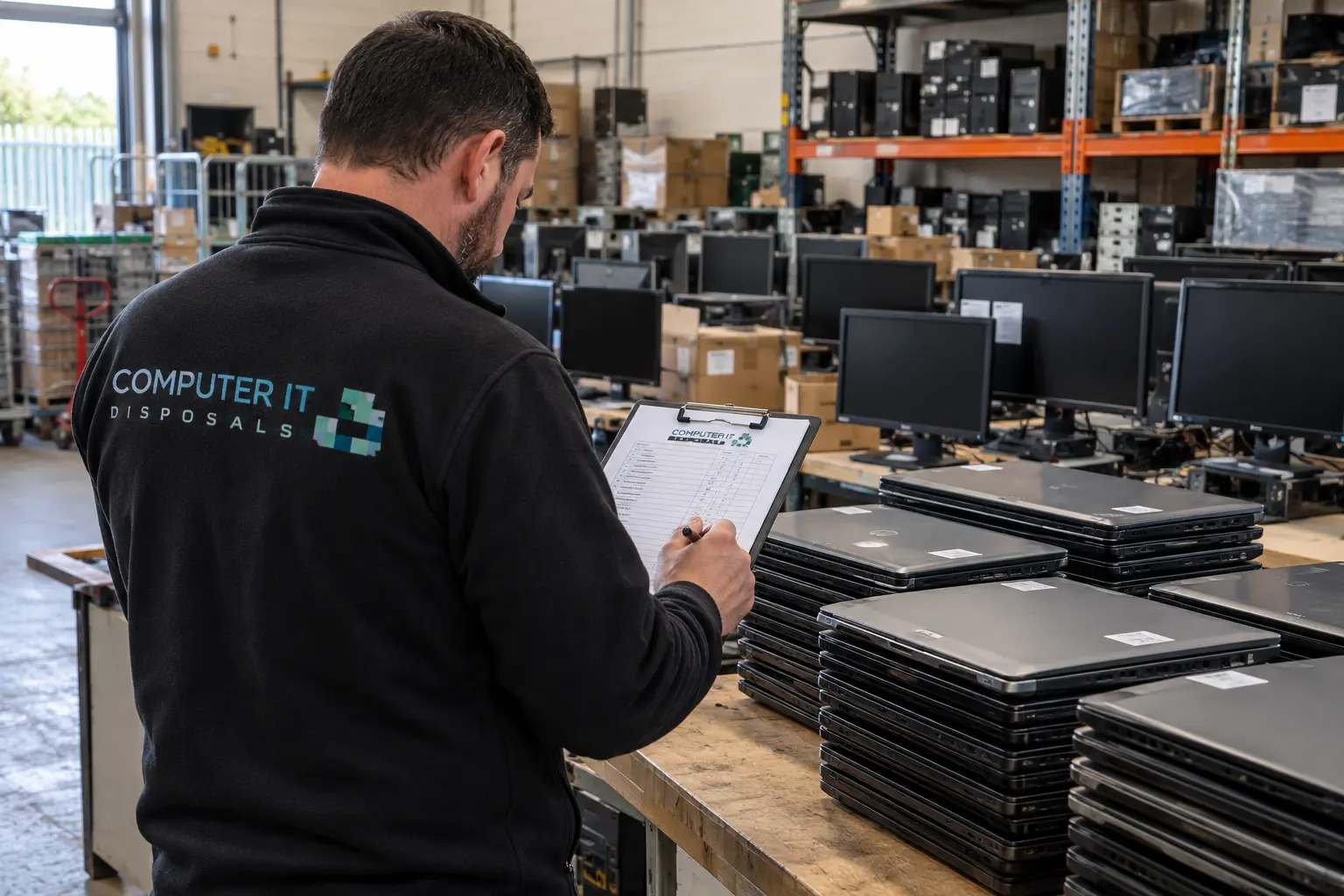
1. Registered to Carry Your Waste
Old IT equipment is Waste Electrical and Electronic Equipment (WEEE). Under the waste duty of care, you must pass it only to a business authorised to take it, and check your waste carrier is registered. Each collection needs a waste transfer note, and both you and the collector must keep a copy for two years.
How to Check
Ask for the provider’s registration number and search it on the Environment Agency’s public register of waste carriers, brokers and dealers. Check the name matches and the registration is current.
How CITD Meets It
CITD is registered with the Environment Agency as an Upper Tier Waste Carrier, Broker and Dealer (CBDU457511). Every collection comes with the waste paperwork you need for your records. Our registrations are on our certifications page.
2. Data Destruction You Can Prove
Deleting files or resetting a device does not remove the data. The ICO’s guide to data security lists the disposal of IT equipment as part of keeping personal data secure. The NCSC’s guidance on secure sanitisation of storage media covers how to erase or destroy media properly.
How to Check
Ask which standard the provider erases to, and how it destroys drives that cannot be erased. Ask to see a sample certificate. A good one lists every device and drive by serial number, not just a total count.
How CITD Meets It
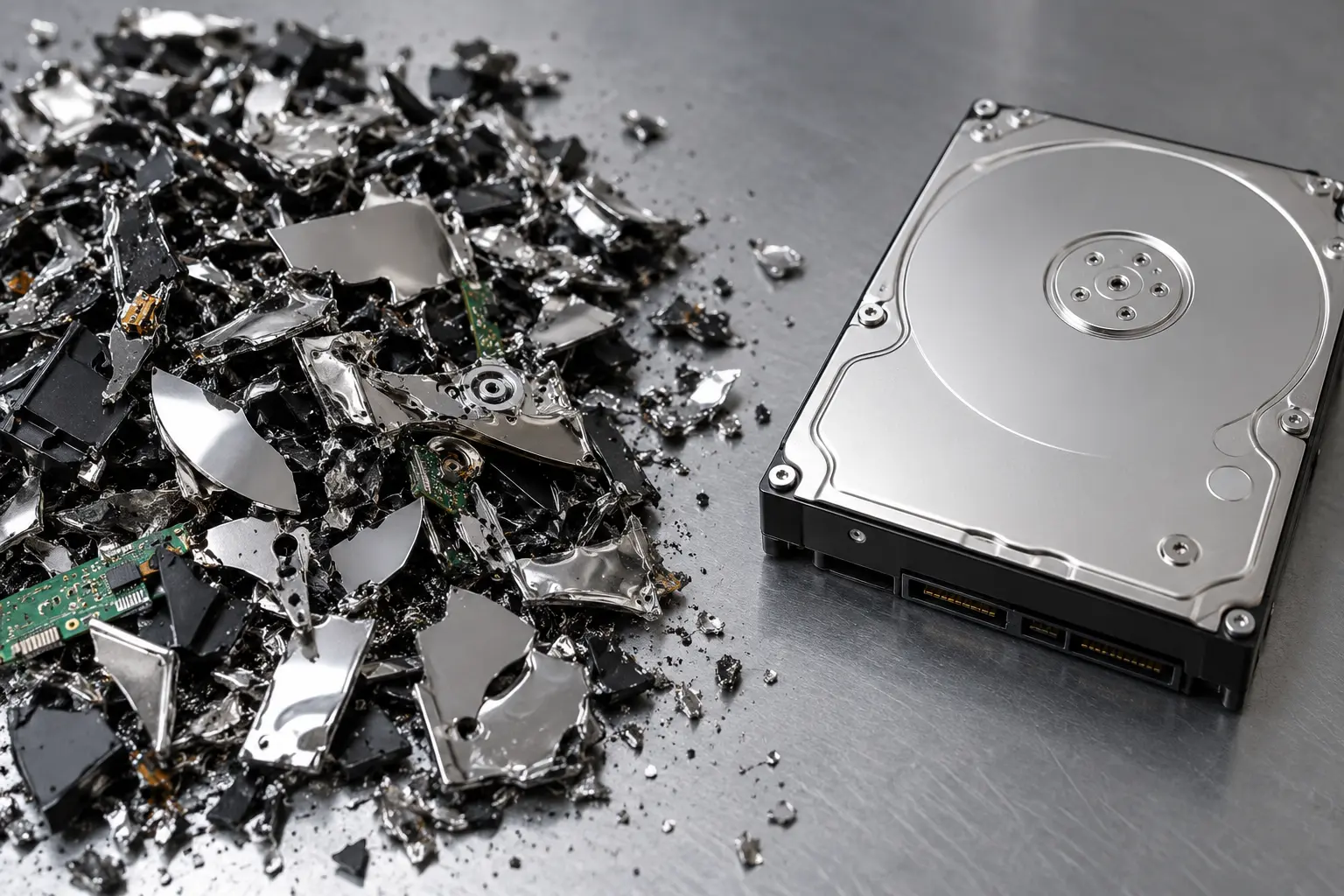
Drives are erased with Blancco software to HMG Infosec Standard No. 5 or NIST SP 800-88, or physically shredded to BS EN 15713: hard drives to 6–8mm, SSDs to 2mm. Witnessed shredding at your premises is available (charges may apply). You receive a data destruction certificate with serial numbers. Read more about hard drive shredding.
3. A Secure Chain of Custody
Most data risk in IT disposal happens between your door and the processing site. If a provider subcontracts collections to a courier, you lose sight of who is handling your equipment.
How to Check
Ask who collects the equipment, whether staff are security vetted, how vehicles are tracked, and when each device is logged.
How CITD Meets It
Collections are made by our own employed staff, security vetted to BS 7858:2019, in GPS-tracked vehicles with equipment in locked cages. We never use couriers or subcontractors. Every device is logged by serial number and asset tag. See our process from collection to certificate.
4. Reuse First, Nothing to Landfill
Working equipment should be reused before anything is recycled. That is better for the environment and can recover value for you. Ask how much equipment the provider reuses, and what happens to the rest.
How CITD Meets It
CITD is ISO 14001:2015 certified for environmental management. Working devices are refurbished and remarketed, and everything else is broken down for materials recovery. 100% of collected equipment is diverted from landfill, and we can provide an ESG report for your sustainability records. See WEEE recycling.
5. Clear Pricing, Coverage and Paperwork
A good IT recycling company tells you the cost, what is collected and what paperwork you will get before anything is booked.
How CITD Meets It
- Free collection for qualifying business volumes, typically 20 or more qualifying items.
- Rebates on recent working equipment, which can offset costs.
- Any charges (for example on-site shredding) agreed and approved by you before booking.
- Coverage across England, Scotland and Wales, including London and our other locations.
- A full compliance pack within five working days: data destruction certificate, WEEE certificate, asset audit and ESG report, under one collection reference.
We collect computers, laptops, servers, monitors, printers, networking equipment, phones and storage media. Retired equipment is handled through our IT asset disposal services.
Questions to Ask Any IT Disposal Company
| Question | What a good answer looks like |
| What is your waste carrier registration number? | A number you can find on the public register |
| Which data destruction standards do you use? | Named standards, e.g. NIST SP 800-88, HMG IS5, BS EN 15713 |
| Will I get a certificate with serial numbers? | Yes, per device, with a sample on request |
| Who collects the equipment? | Their own vetted staff, not couriers |
| What happens to working equipment? | Tested, data destroyed, then reused or resold |
| What will it cost, and what is included? | A written quote before booking |
Red Flags to Avoid
- No registration number, or one you cannot find on the public register.
- “Free” with no detail on what is collected, how data is destroyed or what paperwork you get.
- Totals-only certificates with no serial numbers.
- Cash for equipment with no data destruction process.
- Subcontracted collections with no chain of custody.
Frequently Asked Questions
How do I check an IT disposal company is licensed?
Ask for its waste carrier registration number and search it on the Environment Agency’s public register of waste carriers, brokers and dealers. Collectors registered in Scotland or Wales appear on the SEPA or Natural Resources Wales registers instead.
Do I need a waste transfer note for old IT equipment?
Yes. A waste transfer note is needed for each load of business waste that leaves your premises, and you must keep a copy for two years. Your IT disposal company should provide it.
Is the business or the disposal company responsible for the data?
Your organisation remains responsible for personal data under UK GDPR, including when you hand devices to a third party. That is why a certificate listing each device by serial number matters: it is your evidence.
Is certified erasure as secure as shredding?
For working drives, certified erasure to a recognised standard is suitable and lets the device be reused. Shredding is used for failed drives, highly sensitive data, or where your policy requires destruction. Many organisations use both.
Can a business use a council recycling centre for old IT?
Council household recycling centres are generally for residents’ household waste. Businesses should use a registered waste carrier, which also gives you the paperwork and data destruction evidence you need.
Choosing CITD for Your Next IT Disposal
Computer IT Disposals has handled IT disposal for UK organisations since 2014, from single-office clear-outs to multi-floor projects. We are ISO 9001:2015 and ISO 14001:2015 certified, Cyber Essentials Plus certified, ICO registered (ZA246798) and an Upper Tier Waste Carrier (CBDU457511). See real projects in our case studies.
Talk to our team: call 0333 015 3501 or email info@computeritdisposals.co.uk (Mon–Fri, 9:00–5:00), or contact us with a list of your equipment.
Booking Form
Free collection available for qualifying items · certificates within 5 working days · 100% diverted from landfill.