

The Journey of Recycled Computer at Recycling Centre

Digital devices are essential tools in the modern age. Computers and mobile phones offer productivity and convenience that were hard to imagine for people of the last century.
However, they are also creating newer problems that didn’t exist in the past. The proliferation of digital devices creates an e-waste problem. You have to dispose of piles of old computers and laptops securely. A recycling centre is our need today to avoid the detrimental effects of improper disposal of e-waste.
Recycling computers is imperative for saving the environment. Yes, just like many other items, computers are also recyclable. If you have ewaste to recycle in the UK, you can easily find a good IT Recycling UK firm.
This blog outlines the complete computer recycling procedure, including every step.
Step 1: Collection
This is the first step of the recycling process. It starts from the point of collection. Both individuals and businesses could be the clients of the recycling company. You may have to pick up a couple of devices from your house or piles of computers from the business’s office. This equipment has to be carried to the recycling centre. You may have to pick them up from schools or hospitals as well.
Companies have specialised cages to carry IT equipment. Best recycling companies even manage to track their vehicles during this transport. Processes should be made convenient to encourage people to recycle their electronics.
This process also involves costs in some cases. Especially if you partner with a recycling centre that is from another city. That is why most experts recommend local recycling centres. If you are based in London, try to find computer disposal London services.
Step 2: Sorting
Once the equipment reaches the recycling centre’s premises, experts start sorting it based on model, device type, or other criteria. All recycling centres follow the basic and initial sorting process.
Step 3: Test for reuse
Testing is essential to separate reusable computers from non-reusable computers. Experts test all devices for reuse. Some computers can be easily reused after some
upgrades. Reusable ones are refurbished, and non-reusables are recycled to recover valuable materials.
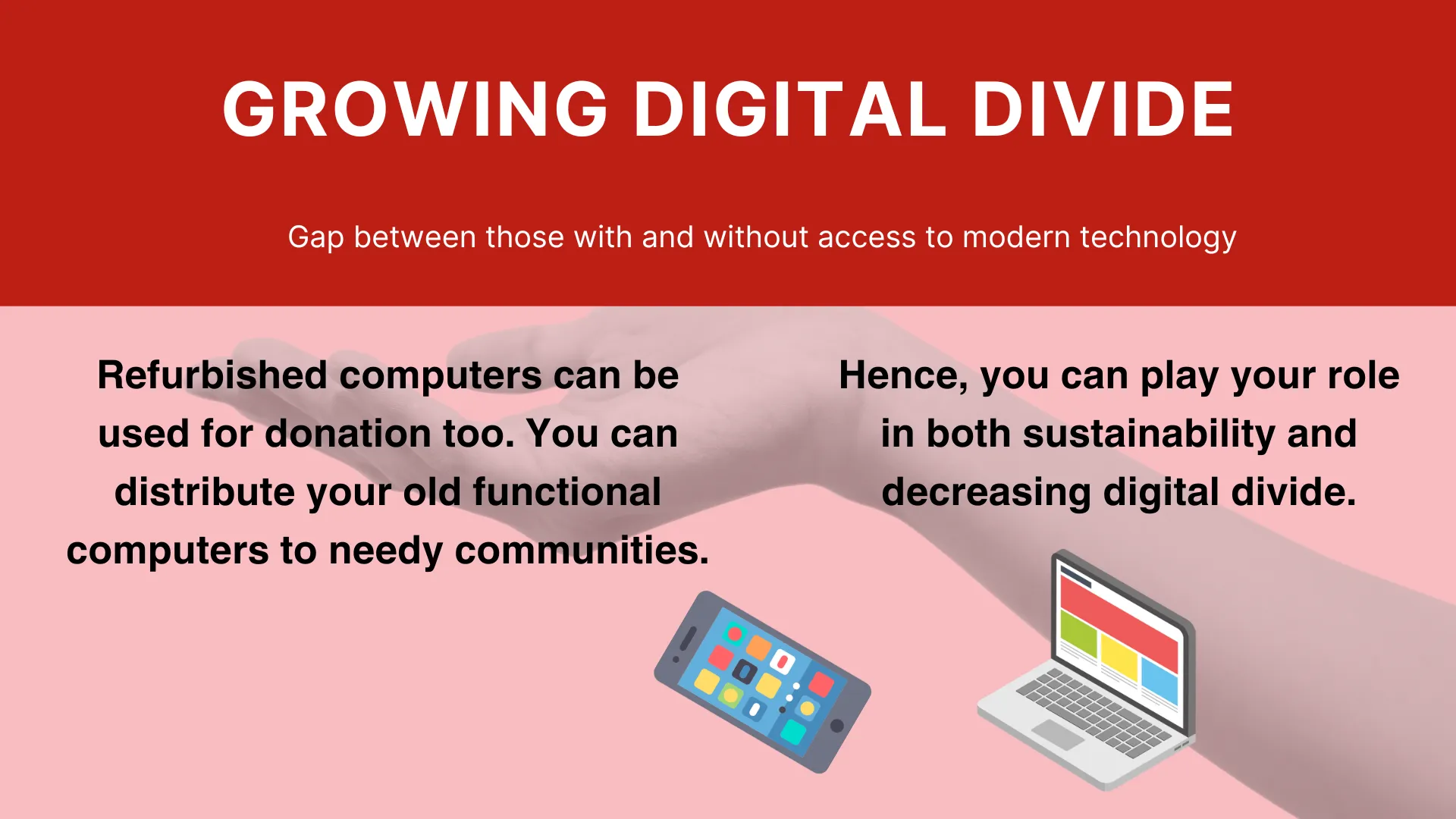
This could be a lengthy process because every device’s condition is different. Sometimes, refurbishments are possible, but the cost of refurbishment is more than the cost of recycling, so we go for recycling. However, the option of donation is also there.
Step 4: Dismantling
In this step, we dismantle the computers. They are opened up, and different components are segregated from the body. In the previous step, we sorted the computers, and in this step, we will sort the components.
There will be one pile of CPUs, one pile of RAMs, and one pile of screens. Teams collaborate to remove circuit boards and power supplies from computers. Also, we remove hazardous materials (like cathode ray tubes).
Amid these piles, we also have a pile of storage devices, such as hard drives, USBs, or compact disks. This stage is labour-intensive and time-consuming, but we cannot skip it since it helps maximise the recovery of valuable materials. However, there is another important step before recycling.
Data destruction & privacy
Data destruction is a must before we finally start recycling. Before the industrial processes start, we have to ensure no data is left on the storage devices.
Any sensitive information stored must be secured. This could include credit card numbers, social security numbers, or anything confidential in nature. Businesses must be more careful about this since they may have their customers’ sensitive information stored. Just one breach incident is enough to destroy the brand’s reputation forever.
Data destruction is also a legal requirement in the UK. The Data Protection Act, abbreviated as DPA, requires businesses to protect personal data. When upgrading IT systems, they must destroy it and make it irrecoverable. Businesses should also know about the WEEE directive and Hazardous waste regulations 2005.
There are three most common methods of data destruction.
Shredding: Shredding is when you physically destroy a hard drive’s platters with data.
Degaussing: Using a strong magnetic field to erase the data is called degaussing.
Overwriting: This technique writes the new data over the old data multiple times. However, this is far less reliable than the previous two. Experts do not recommend it.
It is much better to choose computer recycling services that either use shredding or degaussing methods and provide you with a certificate of destruction.
Dust extraction
Recycling centres put the equipment on the conveyor belt to go through this process. Equipment is shaken on the belt to remove the dust. Collected dust is then thrown away.
Step 4: Recycling
Finally, the collected equipment undergoes the recycling process. Specialised industrial procedures extract precious metals from the devices.
Professional recycling centre would most probably use magnetic separation or any other metallurgical process to recover copper, aluminium, and iron. Hereafter, we can melt these metals and utilise them in various new products. You can make new electronic devices as well as automotive parts. Magnetic separation is the process of large magnets sucking up all iron.
Circuit boards give you as precious metals as gold, silver, and palladium. Other than electronics, they can also be used to make jewellery. Another possible industry for them is aerospace engineering.
Plastic casings are shredded and converted into pellets. Various industries, such as construction and automobiles, accept this new recycled plastic. Glass separated from screens is recovered and used in the glass industry. The water separation method is used to separate the glass from plastics.
Environmental impact & sustainability
Computer recycling has numerous sustainability benefits and a great environmental impact. It saves the environment from the adverse effects of improper disposal and also reduces the need for mining to obtain new raw materials for production.
Thus, you save the energy required to manufacture new electronics. It results in reducing greenhouse gas emissions. Also, recycling supports the economy by creating new job roles.
Conclusion
Computer’s lifecycle is a complex journey. It blends environmental responsibility with technological and economic challenges. The best way to fulfil this environmental responsibility as a business or individual is to consult a recycling centre if you have ewaste to recycle. Do not just throw it in simple trash.
Computer IT Disposals is one of the best options if you are in the UK. They offer nationwide collection service and provide safe IT recycling services.
Booking Form
Free collection available for qualifying items · certificates within 5 working days · 100% diverted from landfill.