

Why Every UK MacBook Owner Should Consider Recycling Over Disposal?
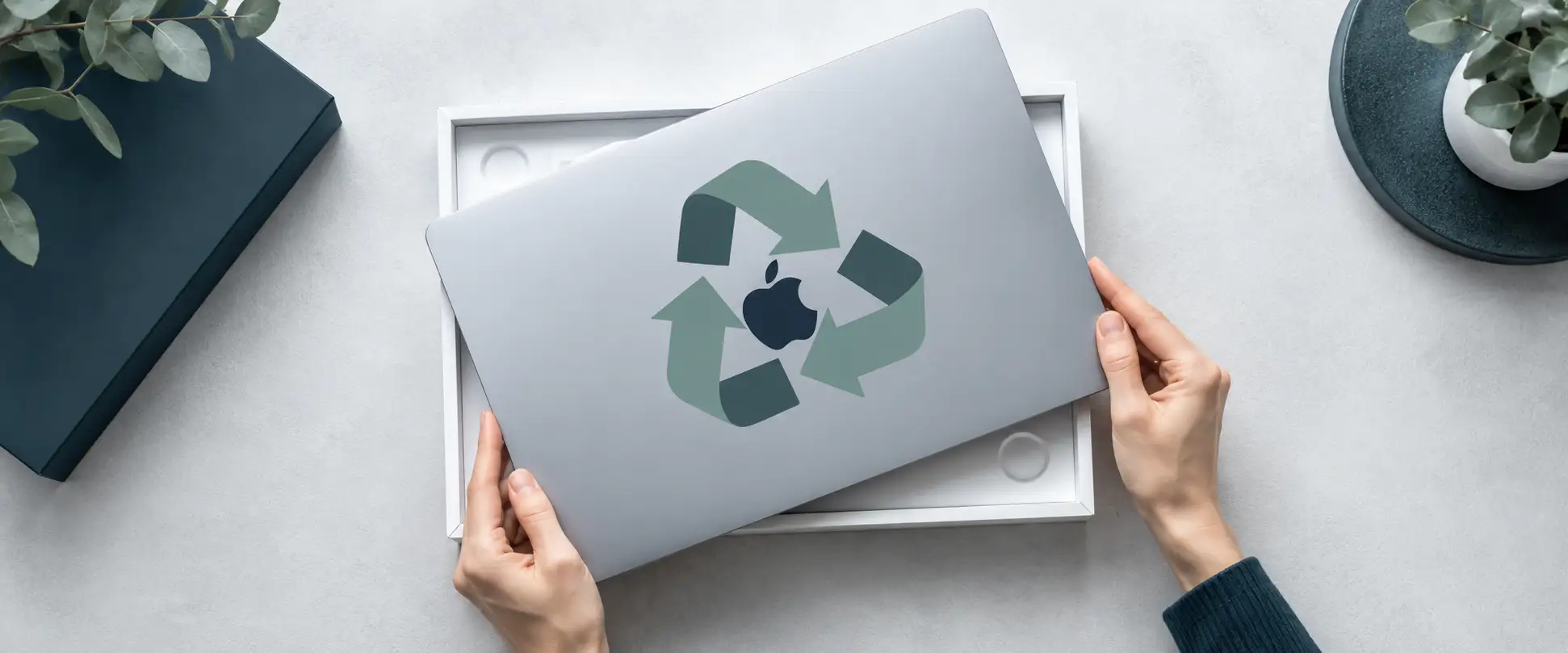
MacBooks don’t last as long in active use as they used to feel like they should — a new model arrives most years, and plenty of working devices get replaced simply because something newer exists. What happens to the old one afterwards matters more than most people think. Recycling, rather than disposal, is the better choice on every measure that counts: environmental, economic, and personal.
At a Glance
- E-waste doesn’t biodegrade — landfilled MacBooks release toxic substances as they break down, with real health consequences for people and wildlife nearby.
- MacBooks contain genuinely recoverable materials, including aluminium, magnesium and polycarbonate, that recycling puts back into circulation.
- Recycling supports a circular economy that reduces the need for fresh mining and lowers the energy cost of manufacturing new devices.
- For the step-by-step process of preparing a MacBook for recycling, including how to erase your data properly, see our full guide on safe MacBook recycling in the UK.
The Environmental Case
E-waste doesn’t decay the way organic waste does — it accumulates, and in landfill, the toxic substances inside old electronics leach into soil and groundwater as the material breaks down in the heat. Lead and mercury, both present in many devices, are particularly harmful, with documented effects on nervous system development in children specifically. Proper WEEE-compliant recycling prevents that outcome entirely.
Emissions and Resource Use
Electronics manufacturing is genuinely energy-intensive, and research on extending device lifespans suggests that keeping electronics in use longer, through reuse, refurbishment and recycling, meaningfully reduces the emissions associated with producing replacements. On top of that, MacBooks contain materials like platinum, copper, aluminium, nickel and cobalt — recovering them through recycling reduces the pressure to mine fresh reserves, which carries its own significant environmental cost.
The Case for Recycling Over Just Discarding
Material Recovery
A MacBook is built from genuinely recoverable materials — polycarbonate, aluminium and magnesium among them. Proper recycling recovers these rather than losing them to landfill.
Data Security
Recycling done properly always includes secure data erasure, which simple disposal doesn’t guarantee at all. We cover exactly how to do this correctly, including Apple’s own current tools, in our guide to safe MacBook recycling.
Energy Savings
Every MacBook that’s reused or properly recycled reduces the energy Apple would otherwise spend manufacturing a replacement from raw materials. It’s a small effect at the level of one device, but it compounds significantly at scale.
The Economic Case
Job Creation
MacBook and wider electronics recycling is a genuine industrial process, supporting jobs across collection, transport, refurbishment and materials processing, alongside ongoing research into better recycling methods.
Resale and Refurbishment Value
Not every MacBook is beyond use. One that can be refurbished has real resale value, and refurbished devices can also be donated, extending access to technology for people who wouldn’t otherwise have it.
The Circular Economy
Recycling is what makes a circular economy model work in practice — minimising waste, lowering production costs over time, and reducing dependence on a constant supply of newly mined raw materials. That’s a more resilient model than one built on continuous new extraction.
How to Actually Do This
Preparing a MacBook for recycling properly — backing up your data, signing out of your accounts, and erasing the drive securely — is straightforward once you know the current process. We cover it step by step, including Apple’s modern Erase All Content and Settings feature, in our guide on how safe it is to recycle a MacBook in the UK.
Recycling Is the Better Choice, Every Time
Disposal is a dead end — the materials are lost, the environmental cost is real, and any data left on the device is a genuine risk. Recycling captures the value that’s still there, in the materials and, often, in the device itself.
We offer secure MacBook and laptop recycling services with free collection for qualifying volumes, and certified data destruction for every device.
Booking Form
Free collection available for qualifying items · certificates within 5 working days · 100% diverted from landfill.