

E-Waste Audits for Enterprises – Why They Matter & How to Start?
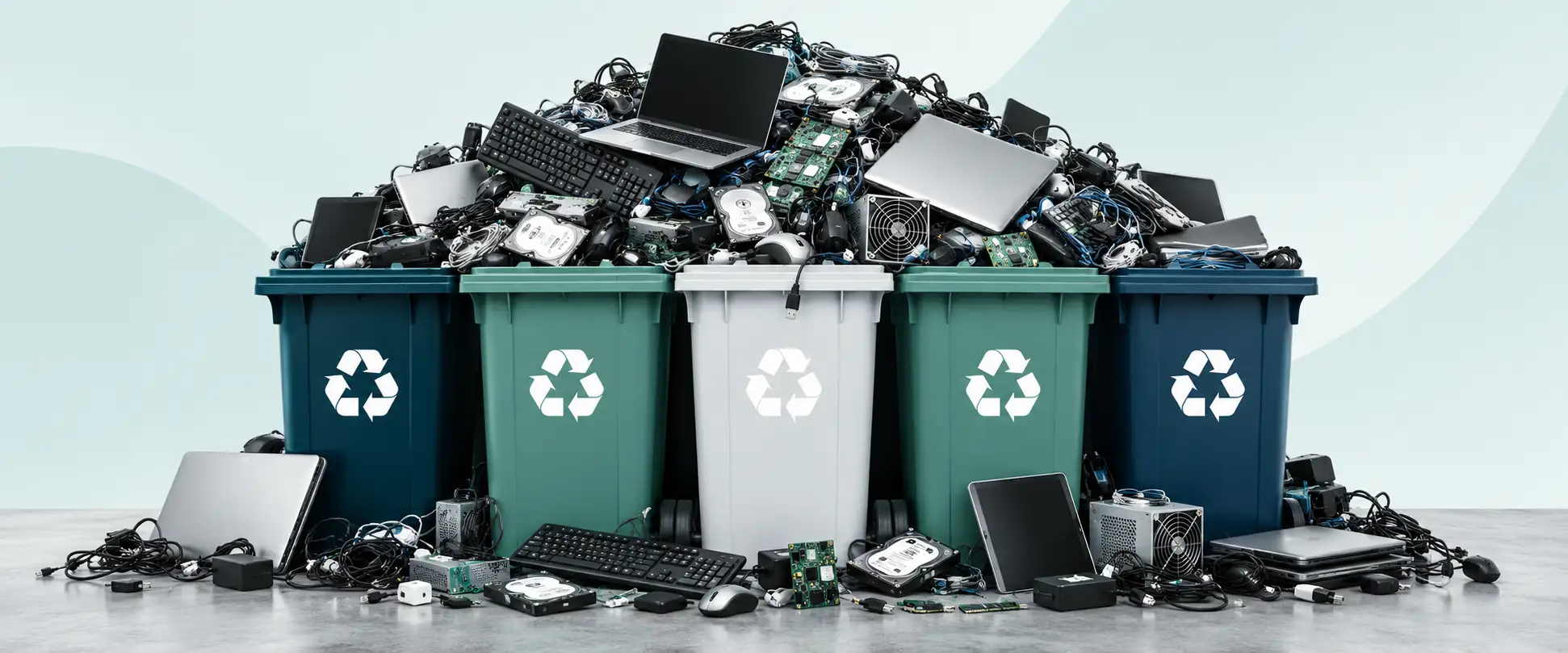
“Audit” tends to trigger a bit of anxiety — the assumption that something’s about to go wrong. An e-waste audit is really the opposite: it’s what makes business e-waste recycling manageable rather than reactive, by giving you an accurate picture of what you actually have before you decide what to do with it. Here’s what an e-waste audit involves, why it matters for enterprises specifically, and how to run one.
At a Glance
- An e-waste audit assesses your organisation’s electronic waste management practices against legal and industry compliance requirements.
- It reveals gaps in policy, process and employee practice before they become a compliance or data security problem, not after.
- Internal audits are run by your own staff; external audits are run by an independent third party, usually for a more rigorous compliance check.
- We provide a serialised Asset Audit Reportwith every collection, giving you exactly this kind of inventory-level visibility as standard.
What Is an E-Waste Audit?
An e-waste audit is an assessment of how your organisation actually manages electronic waste, checked against legal disposal obligations. Passing one is evidence that your environmental and compliance responsibilities are genuinely being met, not just assumed.
Why E-Waste Audits Matter for Enterprises
An audit reveals gaps in policy, procedure and employee practice that are easy to miss day to day, and it’s foundational to any recycling programme actually working as intended, rather than just existing on paper.
Avoiding Non-Compliance
UK law requires businesses to recycle electronic equipment responsibly and keep it out of landfill, and separately requires data to be wiped from any device before it’s recycled. Getting either wrong risks both regulatory fines and a data breach — an audit is what catches that gap before a regulator or an incident does.
Material Recovery
A sufficiently detailed audit tells you what materials your equipment actually contains, which shapes how it should be processed and recycled — nothing valuable gets overlooked, and hazardous materials such as lead or mercury in older equipment get identified and handled separately rather than missed.
How to Start an E-Waste Audit
Start with clear goals and a defined scope: what regulations and standards you need to check against, and which categories of electronics you’re actually assessing. A roadmap the whole team understands from the outset is what makes the results usable afterwards, rather than just a pile of data.
Internal vs External Audits
An internal audit is run by your own staff, often from environmental health and safety, assessing your organisation’s own e-waste management processes. An external audit is run by an independent third party, giving a more objective, arm’s-length evaluation of compliance — worth considering periodically even if you run internal audits regularly.
The E-Waste Audit Process, Step by Step
1. Compile a Full Inventory
Start with a complete, detailed list of every electronic device in scope. Nothing gets skipped at this stage — an audit is only as good as the inventory underneath it.
2. Analyse Each Device
Add detail to the inventory: age, current condition, and manufacturer, at minimum. This is what turns a device list into something you can actually make decisions from.
3. Assess What’s Inside
Identify valuable, recoverable components and flag hazardous materials, documenting findings as you go for accurate reporting and compliance.
4. Research Disposal Routes
Work out the right method for each category of material and device, including certified data destruction for anything data-bearing, checking what’s considered current best practice and industry standard rather than assuming last year’s approach still applies.
5. Evaluate Current Practice Against the Findings
Compare what your organisation is actually doing against what the audit shows should be happening, and against wider industry practice. This is where the real gaps surface.
6. Produce the Audit Report
A useful report covers both what’s working and what isn’t, with specific recommendations, not just a summary. It should give a clear overview of your inventory and procedures, and set the direction for recycling targets and future audits.
Employee Engagement Matters More Than It Looks
An audit’s findings only translate into better practice if the people handling equipment day to day understand why it matters, not just what the policy says. Training staff at every level, not just IT, is what actually reduces environmental impact and risk over time — an audit that stays in a compliance folder doesn’t change anything on its own.
E-Waste Audits and Sustainability Reporting
Beyond compliance, an audit gives you a genuine evidence base for sustainability reporting — recommendations you can act on, and material recovery data that supports a circular economy argument rather than just a general sustainability claim. That’s a meaningfully stronger position for CSR reporting, tenders, or investor due diligence than an unverified statement of intent.
Turning Audit Findings Into Action
An audit is only useful if it leads somewhere — better policy, cleaner inventory, and a documented process for what happens to equipment next. This is effectively what our own asset audit process delivers as standard: a serialised report covering exactly what you have, alongside certified data destruction and WEEE-compliant recycling for whatever the audit confirms is ready to go.
Full certifications are available on our licenses page.
Booking Form
Free collection available for qualifying items · certificates within 5 working days · 100% diverted from landfill.