

ITAD vs Traditional Recycling – What’s Right for Your UK Business?
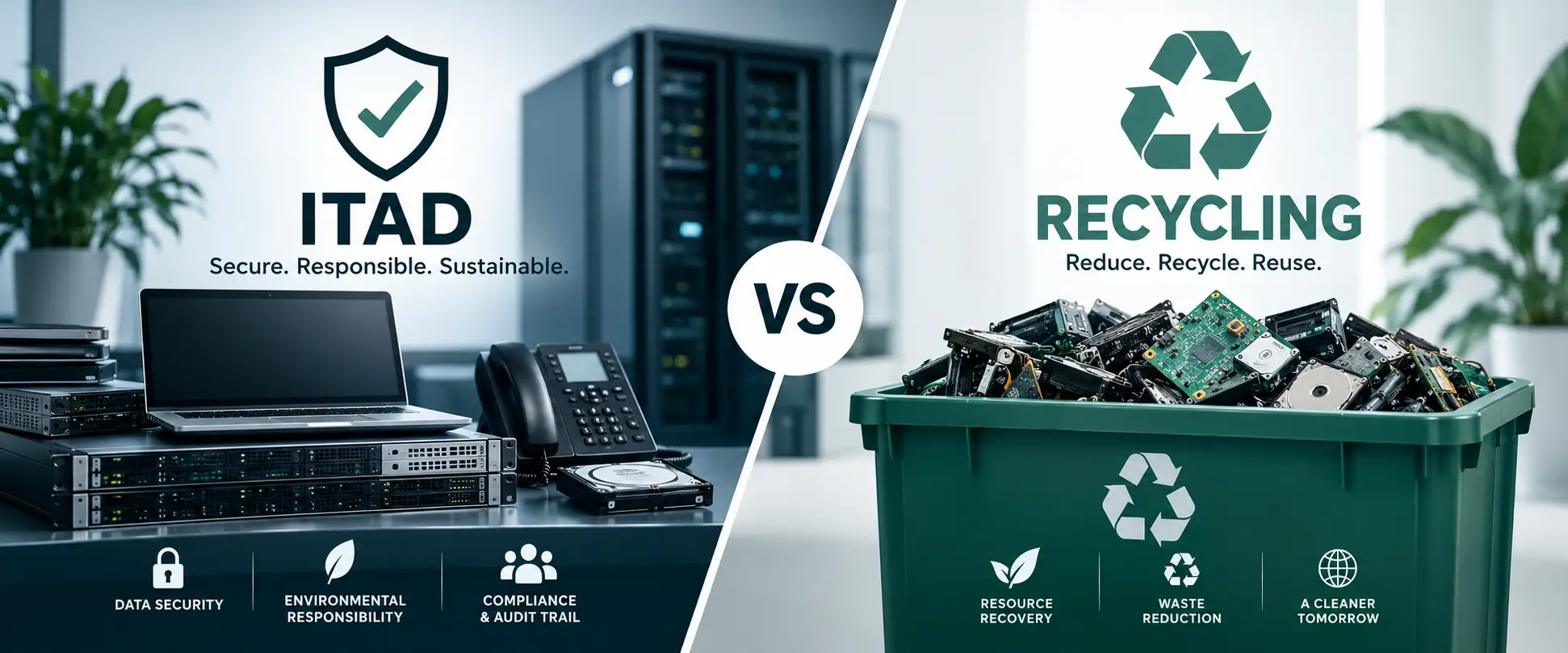
“ITAD” and “recycling” get used almost interchangeably in conversations about retiring old computers, but they’re genuinely different services with different goals. Knowing which one you actually need — and which one a provider is actually offering — makes a real difference to both your data security and what you get back for the equipment. Here’s what each term means, and how to tell them apart.
At a Glance
- Traditional recycling processes all kinds of electronic waste to recover raw materials; ITAD is specific to business IT equipment, with data security and resale value as core goals.
- ITAD treats a retired laptop as an asset with remaining value first, and only recycles it once reuse and resale are genuinely ruled out.
- If your equipment has ever held business or customer data, ITAD is the appropriate route — traditional recycling doesn’t include data destruction as standard.
- We provide both: certified data destruction and asset remarketing where equipment has value, and WEEE-compliant recycling for everything else.
Traditional Recycling: The Basics
Traditional, or general, e-waste recycling collects, dismantles and processes electronic devices to recover raw materials — copper, gold, aluminium, steel, silicon, glass — from anything electronic, not just business IT equipment: computers, phones, monitors, televisions, and general consumer electronics all go through broadly the same process. Its goals are straightforward: keep materials out of landfill, and dispose of them safely.
ITAD: The Basics
IT Asset Disposition is a more specialised service, built specifically around business IT equipment that may still hold sensitive data. Its core services are data sanitisation and destruction, asset remarketing — refurbishing, testing and reselling equipment that still has value — and responsible recycling for whatever genuinely can’t be reused. The underlying goal is different too: maximise the value recovered from retired equipment, protect the data it held, and only treat a device as scrap once reuse has been properly ruled out.
Where They Actually Differ
Purpose
Traditional recycling exists to dispose of electronics safely and recover materials. ITAD exists to protect data and recover value — a device only becomes “recycling” once an ITAD provider has confirmed there’s genuinely nothing left to reuse or resell.
Scope
Traditional recycling is a broad category covering any electronic device. ITAD is specific to the equipment organisations use to store, manage or transmit data — servers, laptops, desktops, and anything else that might hold business or customer information.
Data Destruction
This is the clearest dividing line. We cover exactly why this distinction matters from a compliance standpoint in our guide to secure IT disposal vs. regular recycling, but in short: data destruction is a core ITAD service, not an optional add-on, while a traditional recycler may not offer it at all.
What Happens to the Equipment
Traditional recycling extracts materials and keeps them circulating in the supply chain rather than landfill. ITAD goes a step further first: data is wiped, and the device is assessed for refurbishment and resale before recycling is even considered — recycling is the last step, not the only one.
Which Devices Each One Is For
Traditional recyclers typically take equipment that’s already broken or beyond reasonable repair. ITAD providers are usually brought in for equipment that’s simply outdated but still fully functional — the kind of device where data destruction and resale both still make sense.
Which One Does Your Business Need?
If your equipment has ever held business or customer data — which covers almost every laptop, desktop and server a business owns — ITAD is the appropriate route, not general recycling. Traditional recycling remains the right fit for equipment that never held data, or has already been through certified data destruction and just needs responsible material recovery at the end of its life.
One Provider, Both Services
In practice, most businesses need both at different points in a device’s life, which is why we provide certified data destruction and asset remarketing where equipment has resale value, alongside WEEE-compliant recycling for what’s genuinely at the end of the line.
Full certifications, and details on how we handle both sides of the process, are available on our licenses page.
Booking Form
Free collection available for qualifying items · certificates within 5 working days · 100% diverted from landfill.