

A Guide to IT Asset Management – Tips to Make the Most of ITAM

It is clear as a day that any company seeking success has to deal with digital assets to meet the requirements of the present age. Such IT assets range from software solutions to hardware devices along with networking components. All these tangible and intangible properties of any company are considered as its assets and liabilities. It is important to consider IT asset management by monitoring and managing such assets of a business.
What is IT Asset Management?
IT asset management, also known as ITAM, is a method of upgrading, accounting, deployment and disposal of electronics and IT assets of a certain company. All the hardware, software and licensing of such software is managed by such a system.
Your IT equipment has a limited life, in order to maximise its usage and ensure long life, IT-related decisions of every firm must be informed. The IT asset lifecycle can be managed in order to increase the value that an organisation is generating from such electronics.
IT assets need to be flexible and adaptive in their management procedures. There are new challenges for ITAM with each passing day as there are subscription-based software that can be customised according to the needs of the company and renewal of such license needs to be tracked.
Lifecycle of IT Asset and how ITAM helps
The procedure of IT asset management starts right when you purchase an asset and ends when it retires. In order to increase the lifespan of your IT asset, you must track all the stages of the lifecycle and get the right information about its utilisation. So, what goes in between and how is it dealt with? Here is a detailed account of the lifecycle of IT assets.
To salvage the complete value of your IT asset, you will need to perform IT asset tracking in the operational phase of your asset and retire it through a standard process. The performance of your previous assets can also help understand the working of your new assets for your IT asset management team. This way they will be able to decide if the vendors are to be switched so that the company can enjoy maximum return on investment.
Here are the phases of an asset lifecycle:
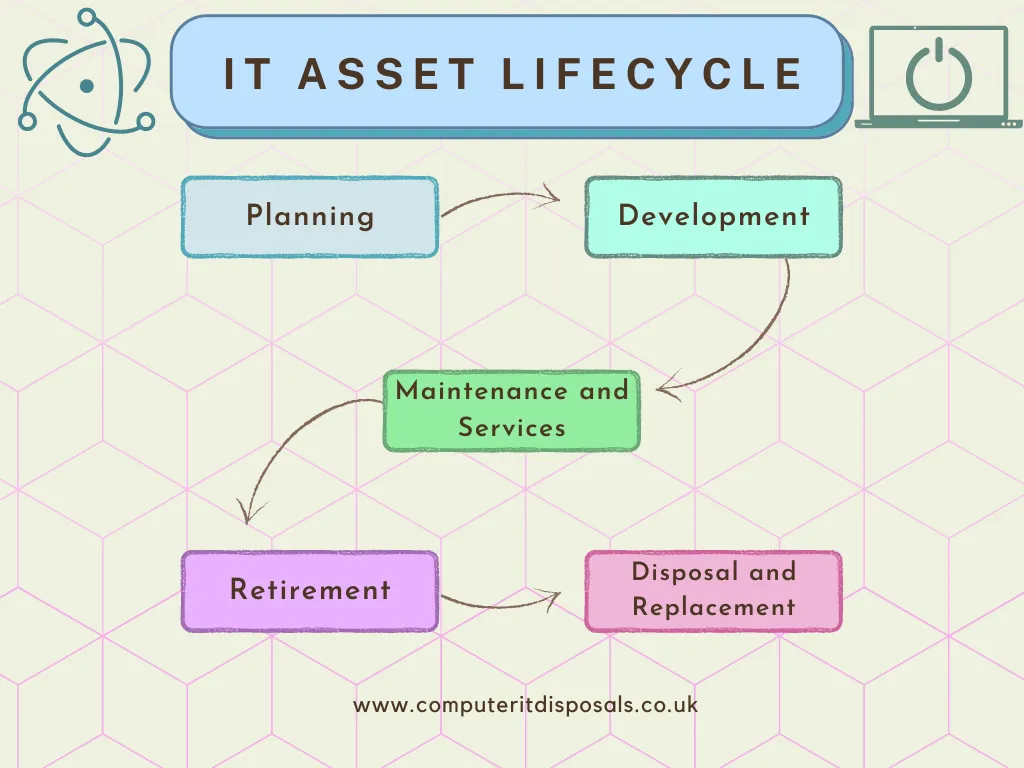
Planning
In order to plan the purchase of new devices, you can create reports on the history of your IT asset and how well it performed. Other than that, other devices are explored and their lifespan is analysed to determine which one suits your company the best.
Acquire
From the report created at the time of planning, you can choose a vendor from the given list that matches your needs and create a purchase order or use a previous one.
Maintenance and servicing
Here you have to introduce your new IT assets into the office setting. It includes its installation and maintenance of your hardware devices. In order to increase the life span of your IT asset, you must schedule maintenance after short intervals.
Retire
Every organisation has a different retirement policy and you can upload yours to your IT asset management system. This is the end of the useful life of your asset and now it must be sent for further procedures in order to save the environment.
Disposal and replacement
Now that your old electronics have completed their life, it’s time that you get yourself a new asset and safely dispose of the old one by getting proper computer disposal services from a trust worthy IT recycler.
Basic functions of your ITAM
IT asset management and tracking have three main functions that must be performed. These functions are,
- All the devices of your organisation must be documented.
- The location of these devices at all times must be identifiable.
- Calculate when they need maintenance, and the retirement timeframe.
Your IT assets are deployed at various locations, especially if it’s a large-scale organisation. It can be really hard to track down an asset when it needs troubleshooting. However, proper tracking and IT asset management allows you to consult the history of your IT asset and track down all the procedures it has gone through. This way you can follow a trail and get all the required information you need and keep track of everything.

Components of an ITAM database
An IT asset management database has three different components that are physical, financial and contractual.
Physical database
In order to fill up the database, all the physical information needs to be added here. You will have to consult the inventory sources to find the data that shows the deployed IT asset. This database offers visibility into the asset that is not deployed yet or is scheduled for retirement.
Financial database
This data includes all the information about the purchase orders through which the IT asset was collected. It shows all data about the order number, vendor name, price, cost center, model details and number of items purchased. This way it is easier to track the financial attributes of your IT assets.
Contractual database
It includes all the contract data of resellers and vendors and suppliers of the IT asset. This database will collect all the information about the final contract with all the details including license information, version number, maintenance and service level and device count.
Types of asset management
Asset management particularly is a broad term that covers a vast range of services. It is divided into three categories that are required at an IT company.
IT asset management (ITAM)
When all the inventory, financial and contractual functions are combined, they all come under the category of asset management. ITAM manages the lifecycle of your assets and takes strategic decisions for the IT ecosystem of your oragnisation. It is included in the IT services management functions of a company.
Software asset and license management
All your software assets need protection and control and this category specifically deals with that. All the software assets that your company has produced or you have licensed from a 3rd party will be kept track of and it will manage when the licenses need to be renewed.
Digital asset management
The management of the intellectual property of your organisation including electronic media and social content such as pictures, videos and other digital data is included in digital asset management. It will include all the media that the company owns or gets from a 3rd party.
Why is IT Asset Management important?
Why do you need IT asset management software? One might wonder about the reason for spending all this time, effort and money on IT asset management and we have all the answers for your doubts. If you are wondering why should you get an IT asset management software, here are a few benefits of IT asset management that are worthy enough to get ITAM.
Informed decisions for IT purchase
The main benefit of using IT asset management is that you get to understand what type of IT equipment you should go for. The consistently maintained IT asset data will help you understand the previous purchases and what steps you should take next for better performance. You can take deployment decisions for your future IT assets with more knowledge and better service and product.
Single source to collect and centralise all information
Without IT asset management, a lot of different people would have to deal with your IT asset in different places. But with proper IT asset management, everything would be combined into one single platform to centralise the information and allow the company to make informed decisions about IT purchase and disposal. ITAM will substitute chaos with organised collection and management of all the data related to your IT requirements. From tracking the usage of your monitors to tracking the IT equipment, ITAM will take care of the management so that your employees can focus on more important tasks.
Highly efficient- Low cost
With passing time, we are relying more and more on IT so it is important to keep it cost-effective for sustainability and long term usage. As Gartner research shows, organisations can cut down around 30% of their IT and software spendings by using IT asset management. By incorporating ITAM best practices, you can optimise all your equipment and software licenses and save money. Manually, it is not as simple to cut such costs down but an IT asset management system can help in many ways. As these complicated licences need specialised knowledge and cannot be dealt with by a layman, it is better for large enterprises to get software asset management and save time, effort and most importantly the extra cost. This system will be improving utilisation and reducing waste.
Easy maintenance
You will not need to keep up with the changes and make spreadsheets for all the updates with IT asset management software. All of your asset will be managed, maintained and scheduled for updates and disposal depending on the stage of lifecycle. Your team will not have to keep track of all the upcoming equipment and the old disposed computers manually because now the system will deal with all that and it will do your team a huge favour.
Ensures security and reliability
Normally the IT security team has to take care of each and every asset by monitoring and auditing it. All the assets that go to the retirement phase of their lifecycle are to be undertaken through a data destruction method for proper disposal and security of your company’s sensitive information.
Business continuity
You will be able to easily restore your services to users in case of any unfortunate outrage or disaster. Also, effective IT asset management will allow you to purchase IT assets that are more resilient and redundant so that it is not affected much by any unfortunate events.
Standardisation
If your organisation is using non-standard IT equipment, it can cost you a fortune because your IT staff will not have expertise in dealing with different kinds of assets. This way their productivity will be affected and every time they have an issue with the equipment, it will turn into a learning process.
IT asset management best practices for guaranteed success
When you incorporate an IT asset management system into your business, it can take away a lot of your issues and bring ease into the organisation. However, here are some best practices that will allow you to get the most out of your ITAM and bring valuable change to your company’s IT infrastructure.
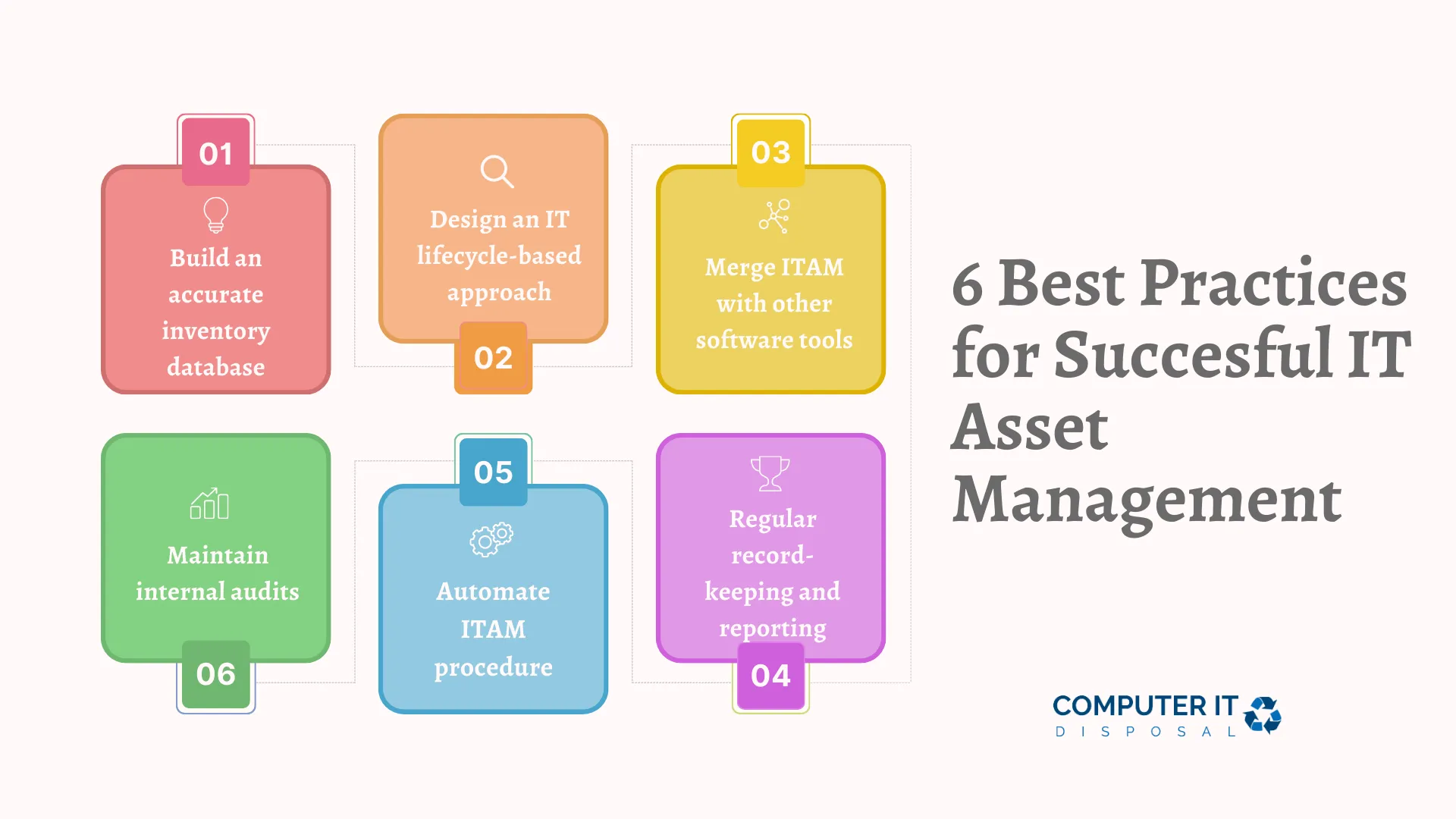
It is essential to build an accurate inventory database
Your IT asset management can only work to its best if the inventory data is maintained completely. Details of each and every device and the type of software installed in each device will be mentioned and the database will also have information about how the asset is being used and by whom? A robust ITAM tool will integrate with your business in order to find any issues with the network, software and hardware IT assets.
Design your approach around IT lifecycle
As we have discussed the IT asset lifecycle above, we must design the management around this lifecycle for better performance. When you track your IT asset through every stage of its lifecycle, it will improve its performance and increase its lifespan. Also, you will have detailed information on why the asset reached retirement early and this information will help you in your future IT asset purchase decisions.
Merge ITAM with other software tools
If your IT asset management can blend with other software tools that you have in your company, it will increase efficiency and performance, thus profit your company and saving money, time and effort. All the data gathered by your ITAM tool will be shareable with such tools and create comprehensive reports in real-time.
Maintain internal audits
Some organisations completely rely on their IT assets but now the introduction of hybrid culture can risk external audits. This is why it is always best to maintain internal audits so that you can fix any mistakes you’ve made in the past. This way your management can keep an eye on the utilisation of hardware IT assets, track the expiry date of the software licences and warranties as well.
Automate the ITAM process
An automated IT asset management system can increase the value of your asset by offering precision in IT asset tracking and security and also save you a lot of time. If you have an automated IT asset management system, it will offer notifications for license renewal, software expiry, compliance issues and asset discovery to make the whole procedure more convenient.
Encourage regular record-keeping and reporting
You need to get regular reports using the ITAM system so that you can analyse your asset usage, software compliance and ROI. These reports will also have details of the budgetary requirements of your IT requirements and how you can make effective IT purchase decisions.
How to choose IT asset management software for your business?
In order to get the right IT asset management software for your business, you must evaluate your business requirements and choose software that is helpful, flexible and efficient. Here are some parameters and the best features that will help you choose the right ITAM system.
ITAM Software that analyses your IT lifecycle
Ideally, you should get IT asset management software that will assess the lifecycle of the company’s IT assets and determine when certain hardware needs to be discarded. With such software, you will also be able to determine how long your software applications can be used and when the license is to be renewed.
Assess your company objectives
Before you buy an ITAM solution, you should determine your company’s objectives and get a clear idea about the applications and usage. You don’t need an expensive solution with tons of features that when your setup does not require them. Evaluate what features you need and then get a solution that fulfils your requirements and helps you attain your company goals.
Check support and compatibility
Before investing in any IT asset management solution, you must evaluate the compatibility and support the system provides for your organisation. You should analyse what kind of hardware and software systems it is compatible with and what type of connectivity it offers.
User-friendliness and flexibility
No matter how many features your ITAM software has and how much it costs, it must be easy to use. If its learning curve is small and your team gets familiar with it in no time, only then does it serve the purpose well. A system that is hard to understand and use will be too difficult and it will take more energy and time to train every new employee of the company.
Report generation features
Your IT asset management software must have automatic report generation features or a reporting template that allows you to see the performance of your IT assets and determine your budget for the upcoming software and hardware devices for your company by determining the retirement of the current assets.
Final word
It’s a thing of the past when IT departments had to deal with IT asset management as well, but now the scale of companies has increased to a great extent and thus it is essential to understand the importance of IT asset management separately. CITD offers the best IT asset management services with reliable recycling and computer disposal services for effective results.
FAQs
What does IT asset management refer to in the IT industry?
IT asset management deals with the strategic decisions about purchasing and disposing of software and hardware assets depending on the lifecycle of the respective assets that are used in an IT infrastructure.
Where to get IT asset management services for my organisation?
CITD is offering efficient IT asset management services with data destruction methods and computer disposal services that positively impact the world around you.
Why ITAM is important?
ITAM can help your business save time, money and effort that was otherwise put in by the IT team to keep track of the assets and follow the expiration of licenses and retirement of certain assets in order to replace them. With the right IT asset management process, all such issues will be taken care of.
Booking Form
Free collection available for qualifying items · certificates within 5 working days · 100% diverted from landfill.