

Bulk IT Equipment Disposal in London Solutions for Offices, Schools & Institutions
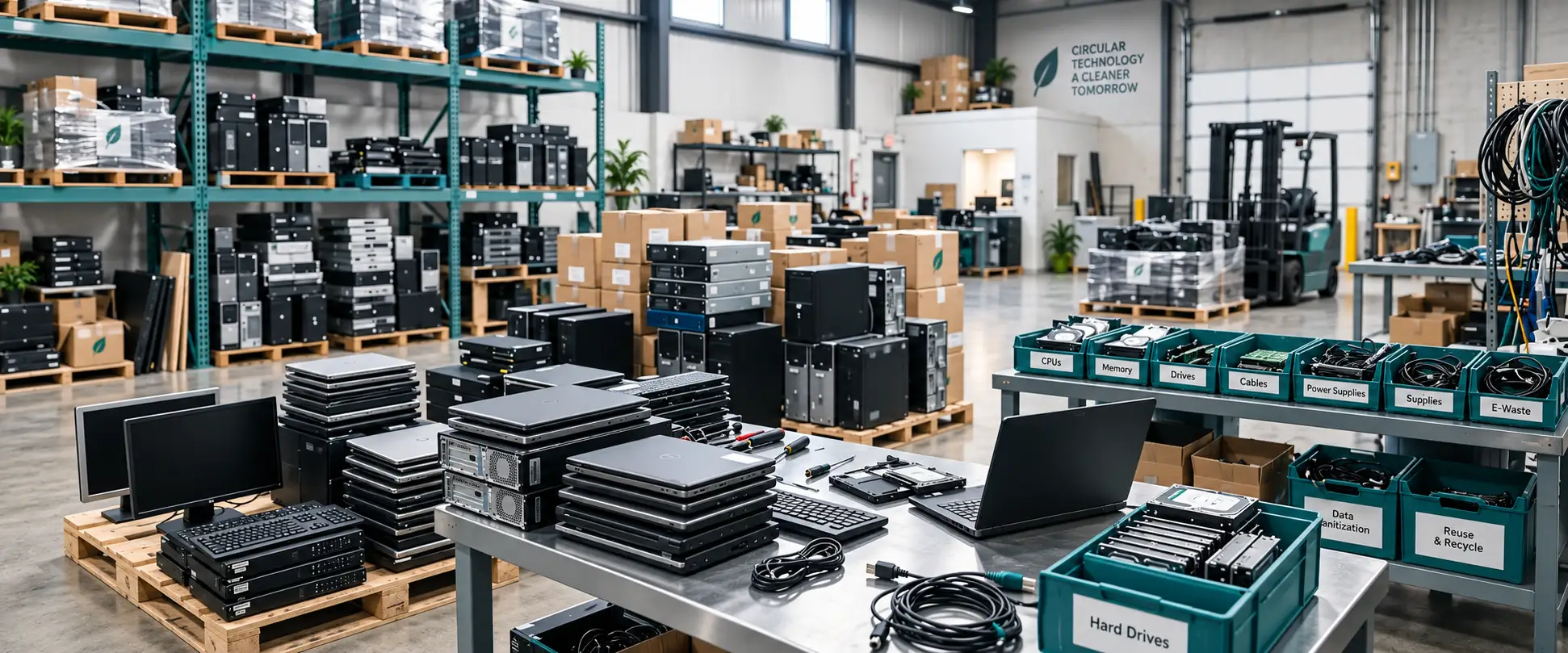
Any electrical device that’s no longer in use counts as e-waste — and it doesn’t biodegrade. Burned or landfilled, it harms the environment and, increasingly, exposes the organisation that discarded it to real regulatory risk. For a single laptop, that’s manageable. For an office clearance, a school IT refresh, or a hospital replacing hundreds of devices at once, bulk IT disposal in London comes with its own set of operational, compliance and logistical challenges — and getting it wrong at scale is expensive in ways getting it wrong with one device isn’t.
At a Glance
- Bulk IT disposal typically means office relocations, school and university IT refreshes, and healthcare or government equipment replacement — all with sensitive data and compliance obligations attached.
- The main challenges at scale are operational disruption, WEEE Regulations compliance, secure logistics, and cost — each intensifies with volume.
- Collection is free for 20 or more qualifying items under four years old, UK-wide.
- We provide a serialised Data Destruction Certificate, WEEE Certificate and Asset Audit Report within 5 working days of collection, whatever the volume.
Who Needs Bulk IT Disposal in London?
Large organisations across very different sectors run into this same problem once equipment starts being retired in volume rather than one device at a time.
Offices and Businesses
Office relocations and IT refreshes are the most common trigger for bulk corporate IT recycling — replacing a hundred devices creates a hundred devices’ worth of data risk and disposal obligation at once, not spread out over years.
Schools and Universities
Educational institutions upgrading IT infrastructure face the same challenge with an added layer: student and staff data, and often safeguarding-related records, sitting on retired devices. Careless disposal risks fines and environmental contamination on top of that data exposure.
Healthcare and Government Institutions
Healthcare and public sector organisations typically run large device fleets and handle some of the most sensitive data categories that exist. For them, the compliance bar — and the consequences of getting it wrong — sits even higher than for most businesses.
The Real Challenges of Bulk IT Equipment Disposal
A stockpile of outdated IT equipment can feel daunting to even start on. In practice, it breaks down into four recurring problems.
Operational Disruption
Replacing a large number of devices in one go can disrupt day-to-day operations if it isn’t planned properly. The bigger the project, the greater that risk — devices can usually be replaced and disposed of in planned batches rather than all at once, to keep regular operations running.
Regulatory Compliance at Scale
Compliance matters whether you’re disposing of one hard drive or a thousand, but volume raises the stakes: more devices means more data, more WEEE Regulations obligations, and a much larger consequence if something goes wrong.
Logistics
Gathering, moving and processing a large volume of IT equipment calls for specialised transport, not a van and a good intention. Vehicles should be secure and GPS-tracked, with a documented chain of custody, to remove the risk of loss or theft along the way.
Budget
Costs scale with volume too — specialised data destruction and materials recovery both take genuine expertise, which is part of why unrealistically cheap bulk quotes are usually cutting a corner somewhere.
How to Approach a Bulk IT Disposal Project
1. Know What You’re Dealing With
Start with an inventory, not a phone call. Group similar items together — units and processors, hard drives, SSDs, batteries, servers — before you contact anyone. It takes longer up front, but it makes documentation, quoting and the actual collection far more straightforward.
2. Secure Your Data Before Anything Else Moves
A data breach at this stage costs far more than the disposal itself — in fines, lost trust and lost sales. Deleting files or reformatting drives isn’t enough on its own; the data is still recoverable with widely available tools. Take a backup of anything still needed, then arrange certified data destruction before equipment leaves your control, not as an afterthought once it’s already in storage.
3. Store Hardware Safely in the Meantime
A bulk project can take time to schedule. While you wait for collection, sturdy boxes or bins and an access-controlled space keep equipment from becoming a security or damage risk while it sits.
4. Choose a Partner Who Can Actually Handle the Scale
This is the step worth the most due diligence. Ask for a track record of similar-sized projects, verifiable certifications, and specifics on data destruction methods — not just a generic assurance that “we handle everything.” If the answers are vague, that’s reason enough to keep looking.
5. Schedule Collection
Once you’ve chosen a partner, agree a date and time that works around your operations — same-day, out-of-hours and weekend collections are usually available for time-sensitive projects.
6. Insist on Documentation
Documentation is what turns the project into evidence, not just a completed task — it’s what demonstrates compliance if anyone ever asks. A serialised asset audit trail, data destruction certificates, and a WEEE certificate should all be part of what you receive, not something you have to chase afterwards.
Getting Bulk Disposal Right the First Time
Handled with a plan, bulk IT disposal in London doesn’t have to be the daunting project it can feel like at the outset. The organisations that get it right treat it the same way whether they’re clearing 20 devices or 2,000: full data destruction, documented chain of custody, and certificates that hold up if anyone asks.
We collect from offices, schools and institutions across London and the wider UK — see how we handled projects for a primary school and a healthcare and life sciences organisation. Collection is free for 20 or more qualifying items, with a full compliance pack issued within 5 working days regardless of volume.
Booking Form
Free collection available for qualifying items · certificates within 5 working days · 100% diverted from landfill.