

From Offices to Warehouses: IT Disposal for Every London Business Size
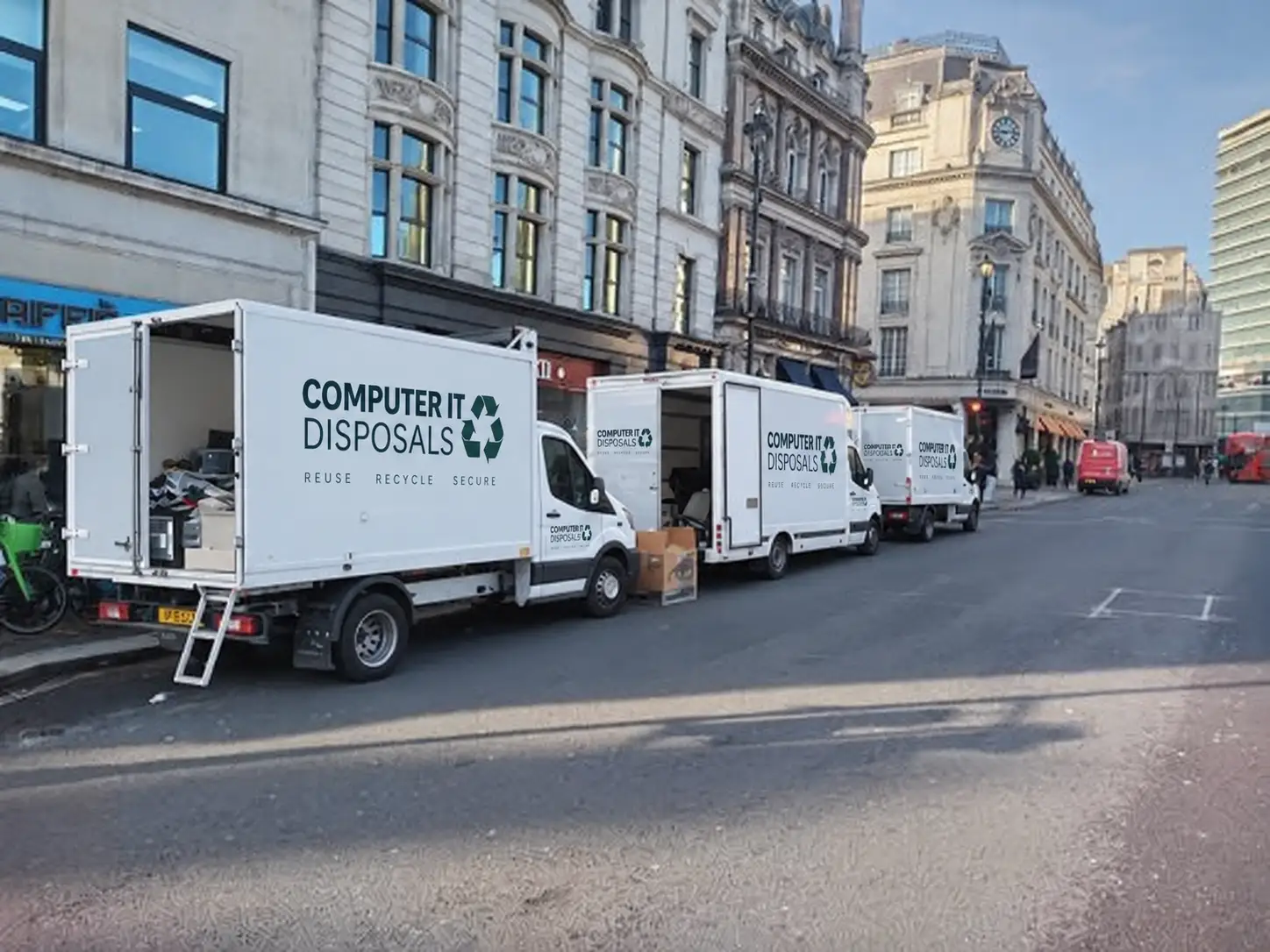
The UK is one of the largest producers of e-waste in the world, and every London business — whatever its size — carries some responsibility for the devices it retires. But “IT disposal” doesn’t look the same for a five-person office as it does for a warehouse decommissioning hundreds of servers. This guide covers what secure, compliant IT disposal actually looks like at each scale.
At a Glance
- IT disposal obligations under WEEE Regulations and UK GDPR apply to every business, regardless of size.
- Small businesses typically need fast, low-friction collection; larger organisations need documented chain of custody and asset-level tracking.
- We provide free collection for 20 or more qualifying items under four years old — and will confirm options for smaller collections too.
- Every collection includes certified data destruction and a full compliance pack within 5 working days, whatever the volume.
Why IT Disposal Matters, Whatever Your Size
Procedures and volumes differ, but the underlying obligation doesn’t: every London business that’s used IT equipment eventually has to dispose of it responsibly.
Cyber Security Risk
An old computer left in a skip or a landfill doesn’t stop holding data just because it’s been thrown away. Trade secrets, intellectual property and customer information can all still be recoverable from a drive that looks disposed of — and that risk exists at any business size, not just for large enterprises with more devices to worry about.
Legal Exposure
Burning or landfilling old IT equipment is an offence under UK environmental law, and businesses that handle personal data are separately required to destroy it securely under UK GDPR and the Data Protection Act 2018. Neither obligation scales down for smaller businesses.
Corporate Social Responsibility
Responsible IT disposal has become part of how businesses are judged on sustainability, alongside more visible things like plastic use. Electronic waste left to degrade releases harmful toxins that affect both human health and wildlife — proper recycling avoids that outcome entirely.
Small Offices: Fast, Low-Friction Disposal
Space and budget are usually the real constraints for small businesses — there’s often nowhere to let retired devices pile up, and no appetite for a lengthy, complicated process. The good news is that free collection isn’t only for large volumes: even below the 20-item threshold, it’s worth sending across your equipment list, since many smaller collections still qualify.
For working equipment you don’t need collected at all, donation is also worth considering — plenty of organisations are glad to take on serviceable devices, provided the data has been properly wiped first, not just deleted.
Mid-Sized Companies: Streamlined, Scheduled Disposal
Mid-sized businesses tend to accumulate more devices at once than a small office, without yet needing the scale of process a large enterprise requires. Good coordination between departments and a properly scheduled collection keeps this straightforward rather than becoming its own project.
Refurbishment is also worth considering at this scale — a damaged device is often not a dead one, and getting it assessed before writing it off can recover value that would otherwise be lost.
Large Enterprises and Warehouses: Bulk Clearance
Once volumes reach warehouse or enterprise scale, the process needs to change with it: asset tag logging, documented chain of custody, and specialised GPS-tracked transport all become necessary rather than optional, since tracking hundreds of devices informally is how equipment goes missing. We cover exactly what that process looks like, sector by sector, in our guide to bulk IT equipment disposal in London.
Data Matters at Every Size
Whether you’re a five-person office or a national warehouse operation, the same rule applies: deleting files or reformatting a drive doesn’t remove the data, it just hides it from casual view. Improper handling at any scale risks legal trouble, breached customer trust, and the cost of a genuine data breach — certified data destruction is what actually closes that gap, not the size of the business doing it.
How to Choose the Right Recycling Partner
Whatever your size, the same six things are worth checking before you commit:
- Do they follow WEEE Regulations for handling old IT equipment?
- Are they compliant with UK GDPR and the Data Protection Act 2018?
- Do they use a recognised, documented data destruction method?
- Do they keep complete records and documentation for every collection?
- Will they provide proof of both data destruction and recycling?
- Do they offer secure, tracked collection rather than an informal pickup?
One Process, Scaled to Fit
The underlying requirements don’t change with business size — secure data destruction, WEEE compliance, and documentation you can actually produce if asked. What changes is how that process is delivered: fast and simple for a small office, coordinated for a mid-sized business, fully tracked for an enterprise clearance.
We collect from London businesses of every size — free for 20 or more qualifying items, with smaller collections assessed on request — and issue a full compliance pack, including a serialised Data Destruction Certificate, within 5 working days. Full certifications are available on our licenses page.
Booking Form
Free collection available for qualifying items · certificates within 5 working days · 100% diverted from landfill.