

IT Recycling for Large Enterprises Managing Bulk Disposal Efficiently
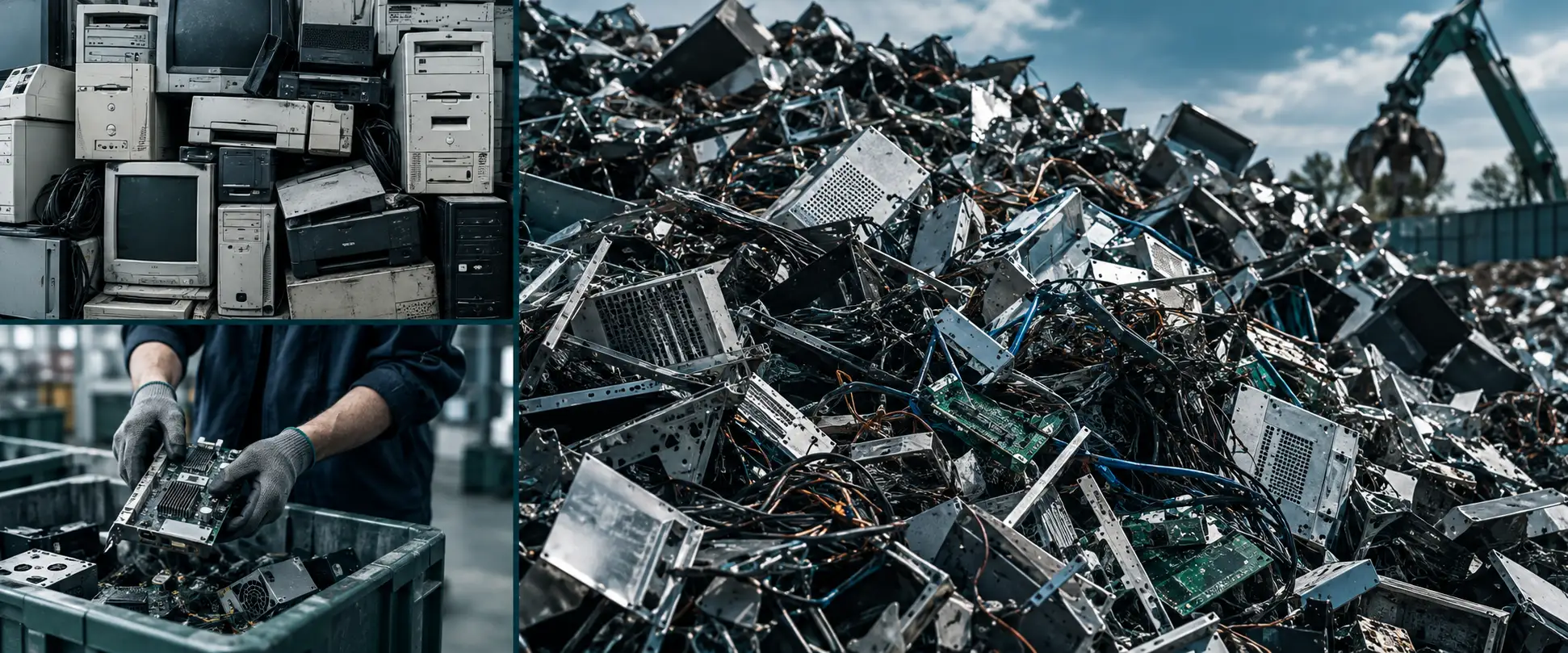
Recycling a single laptop is straightforward. Recycling the retired IT estate of a large enterprise — potentially hundreds of devices, each holding data, each needing accounted for — is a genuinely different undertaking. Bulk IT disposal brings its own set of challenges, and this post covers how large UK enterprises manage it efficiently, from building a proper policy through to recovering value from what gets retired.
At a Glance
- Enterprise-scale IT disposal has to manage data security, logistics, regulatory compliance and resource recovery simultaneously, not as separate problems.
- UK businesses operate under UK GDPR, the Data Protection Act 2018, and the UK’s own WEEE Regulations 2013 — not EU law directly, and not the older Data Protection Act 1998.
- A documented ITAD policy, employee engagement, and a dedicated recycling team are what turn bulk disposal from a recurring headache into a repeatable process.
- We provide asset-level tracking, certified data destruction, and refurbishment/resale assessment for every enterprise collection, alongside a full compliance pack.
Why Enterprise-Scale Disposal Is a Different Problem
The complexity of IT recycling scales with volume, not just linearly. A large enterprise typically has dozens or hundreds of employees, each generating retired devices over time — which means a substantial, ongoing volume of data to secure and destroy, and a genuine logistics operation to run, not an occasional pickup. Storage devices need to be shredded or wiped to a standard that makes the data irrecoverable via certified data destruction, specialised vehicles are needed to transport stacks of equipment safely and securely, and non-compliance at this scale risks meaningfully larger fines than a single device ever would.
The Core Challenges
Four things need managing together, not in isolation: data security (erasing sensitive data without exception), logistics (specialised transport and processing infrastructure), regulatory compliance (navigating WEEE and data protection law without gaps), and resource recovery (maximising the value of what’s retired rather than defaulting to scrap). We cover the operational side of managing these at scale — asset tracking, GPS-tracked logistics, documented chain of custody — in our guide to bulk IT equipment disposal in London.
The UK Regulatory Picture
A few specific pieces of law apply directly to enterprise IT disposal in the UK.
WEEE Regulations
Waste Electrical and Electronic Equipment rules originate from the EU’s WEEE Directive, but UK businesses operate under the UK’s own WEEE Regulations 2013 (as subsequently amended), which implement that directive into UK law. They require separate collection and proper treatment of e-waste, set recovery and recycling targets, and require registration with a compliance scheme.
UK GDPR and the Data Protection Act 2018
Personal data on any device being disposed of must be securely destroyed before recycling — this obligation sits under UK GDPR and the Data Protection Act 2018 (which replaced the earlier 1998 Act), not a piece of legislation from the late 1990s. Getting this wrong risks both a data breach and direct regulatory exposure.
Environmental Permitting
Certain categories of WEEE — CRT monitors and older TV sets, for example, which contain hazardous substances — require an Environment Agency permit to process. This applies to the facility doing the recycling, so it’s worth confirming as part of vetting any provider.
Managing Bulk Disposal Efficiently
1. Build an ITAD Policy
A documented policy gives bulk disposal a structure instead of leaving it to be reinvented every time: clear goals (waste reduction, value recovery, or both), a defined procedure for every stage from data destruction to final recycling, and an explicit link to the regulations you need to stay compliant with. This is what turns disposal from a recurring ad hoc task into a repeatable process.
2. Bring Employees Into the Programme
A policy only works if people follow it. Training staff on why proper disposal matters, involving them in asset tracking where relevant, and recognising the people who engage with the programme all help build a culture where the policy is actually followed, not just filed.
3. Assess Assets Individually
Not every retired device is scrap. Assessing age and condition item by item, rather than treating a whole batch the same way, is what identifies equipment that can genuinely be reused or refurbished instead of recycled outright.
4. Run a Company-Wide Asset Audit
A proper audit — knowing what you have, where it is, and its condition — is foundational to managing bulk disposal well, and useful well beyond recycling, feeding into budgeting and disaster recovery planning too. We cover exactly how to run one in our guide to e-waste audits for enterprises.
5. Give Someone Ownership
IT teams already carry a full workload, and folding a bulk recycling project into everyone’s day job tends to mean it gets deprioritised. A small team, or a single named owner, with actual responsibility for the programme tends to get far better results than diffuse, shared responsibility.
6. Recover Value Through Refurbishment and Resale
Equipment that’s still functional, or only has minor faults, often has real resale value once refurbished — partnering with a provider who assesses for this rather than defaulting straight to recycling can turn part of the disposal cost into a return.
Turning a Complex Task Into a Repeatable Process
Enterprise-scale IT disposal looks complicated from the outside, but the organisations that handle it well aren’t doing anything exotic — they have a documented policy, an engaged team, and a provider that can be trusted with the logistics and the data.
We manage bulk computer recycling for large UK enterprises, including asset tracking, certified data destruction, and refurbishment assessment on every collection. Full certifications are available on our licenses page.
Booking Form
Free collection available for qualifying items · certificates within 5 working days · 100% diverted from landfill.