

Server Recycling & Disposal for UK Businesses
Nothing concentrates risk like a server. One rack unit can hold more sensitive data than every laptop in the building: client databases, financial systems, email archives and backups of everything. When infrastructure reaches end of life, that concentration is exactly what your disposal process has to answer for.
Computer IT Disposals provides secure server recycling and disposal for UK organisations: decommissioning, de-racking and removal by our own vetted staff, per-drive certified data destruction, value recovery on eligible hardware and 100% diverted from landfill, with your compliance pack within five working days. Overseas operators with racks in UK data centres run the whole job through us remotely.
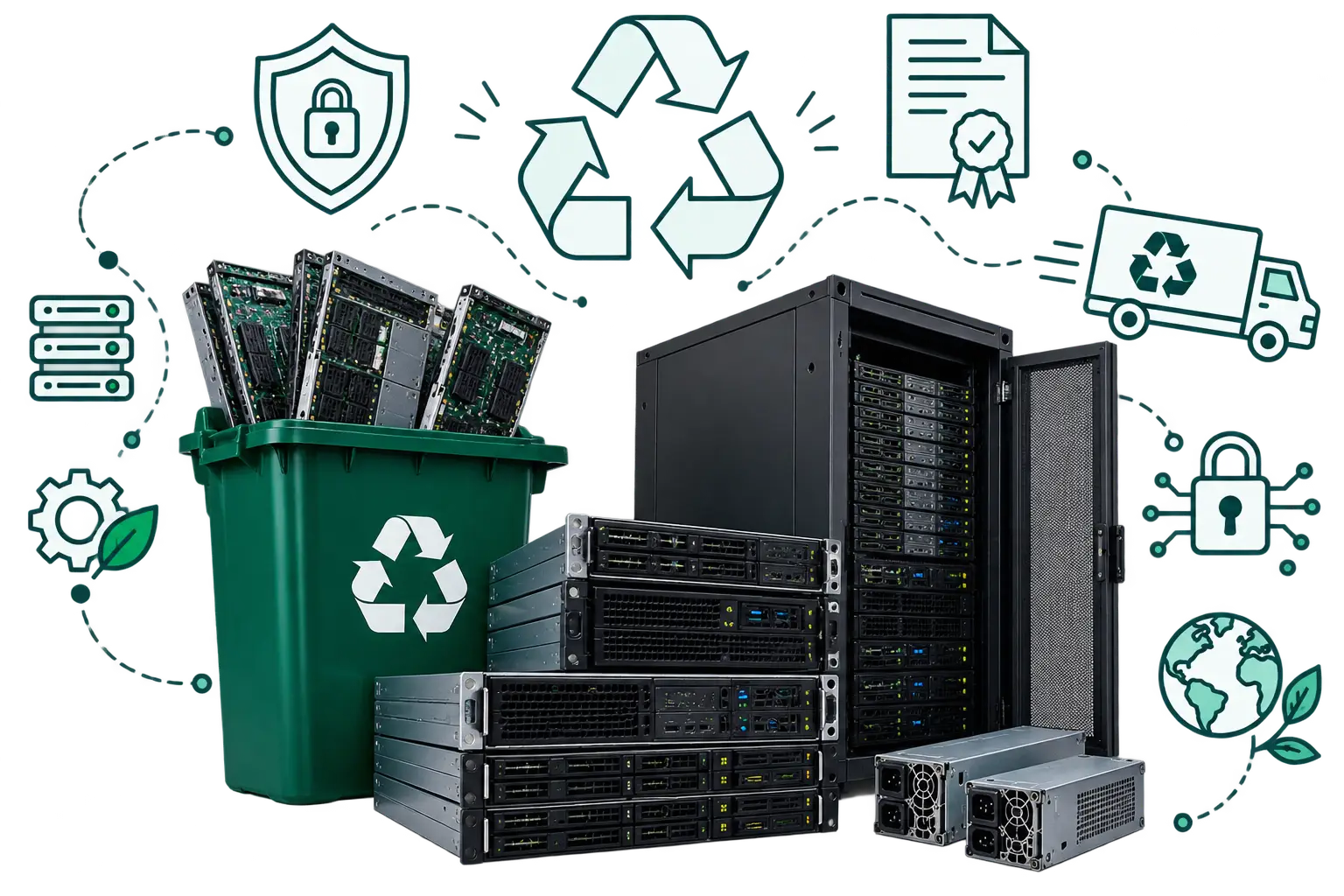
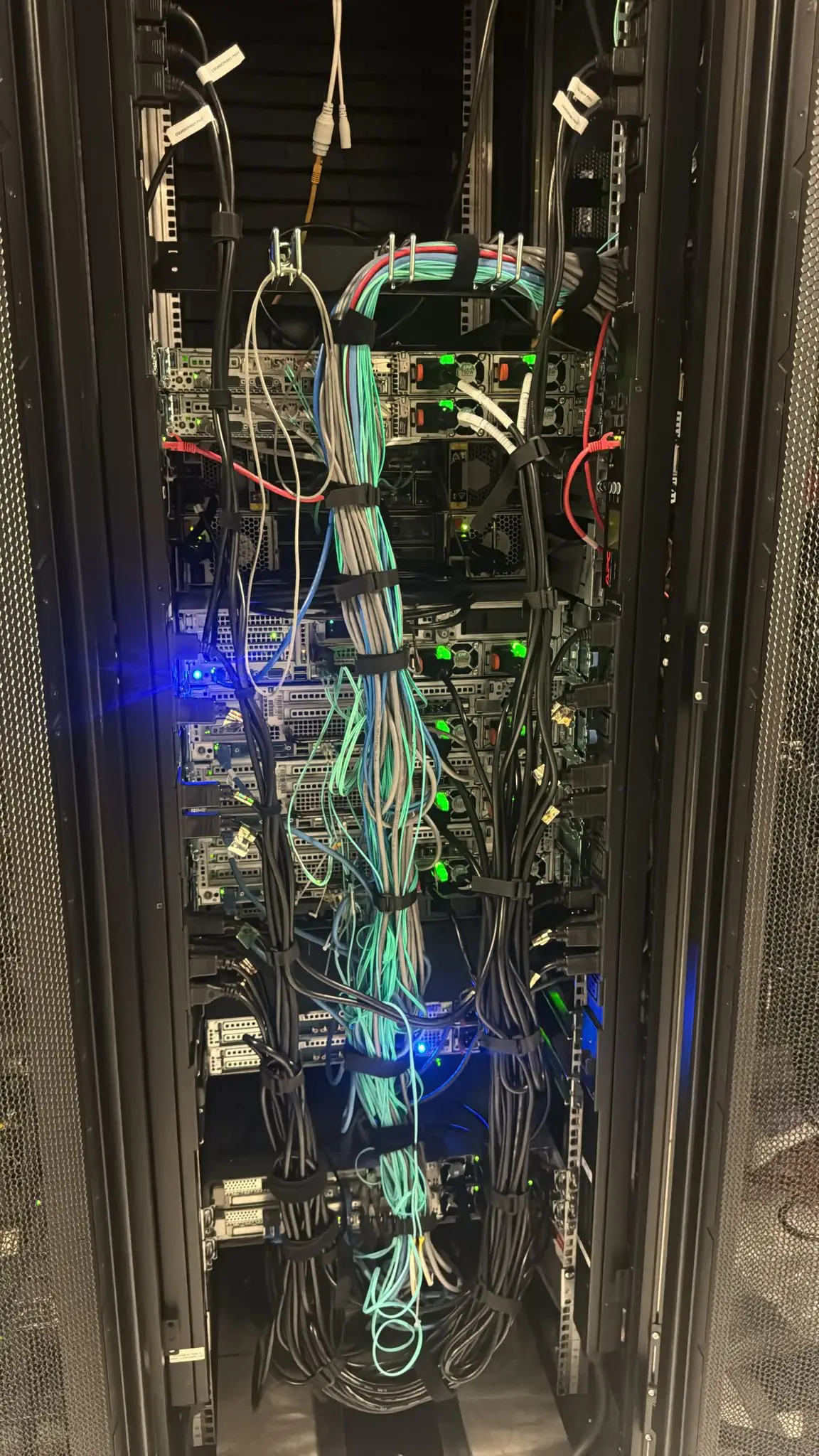
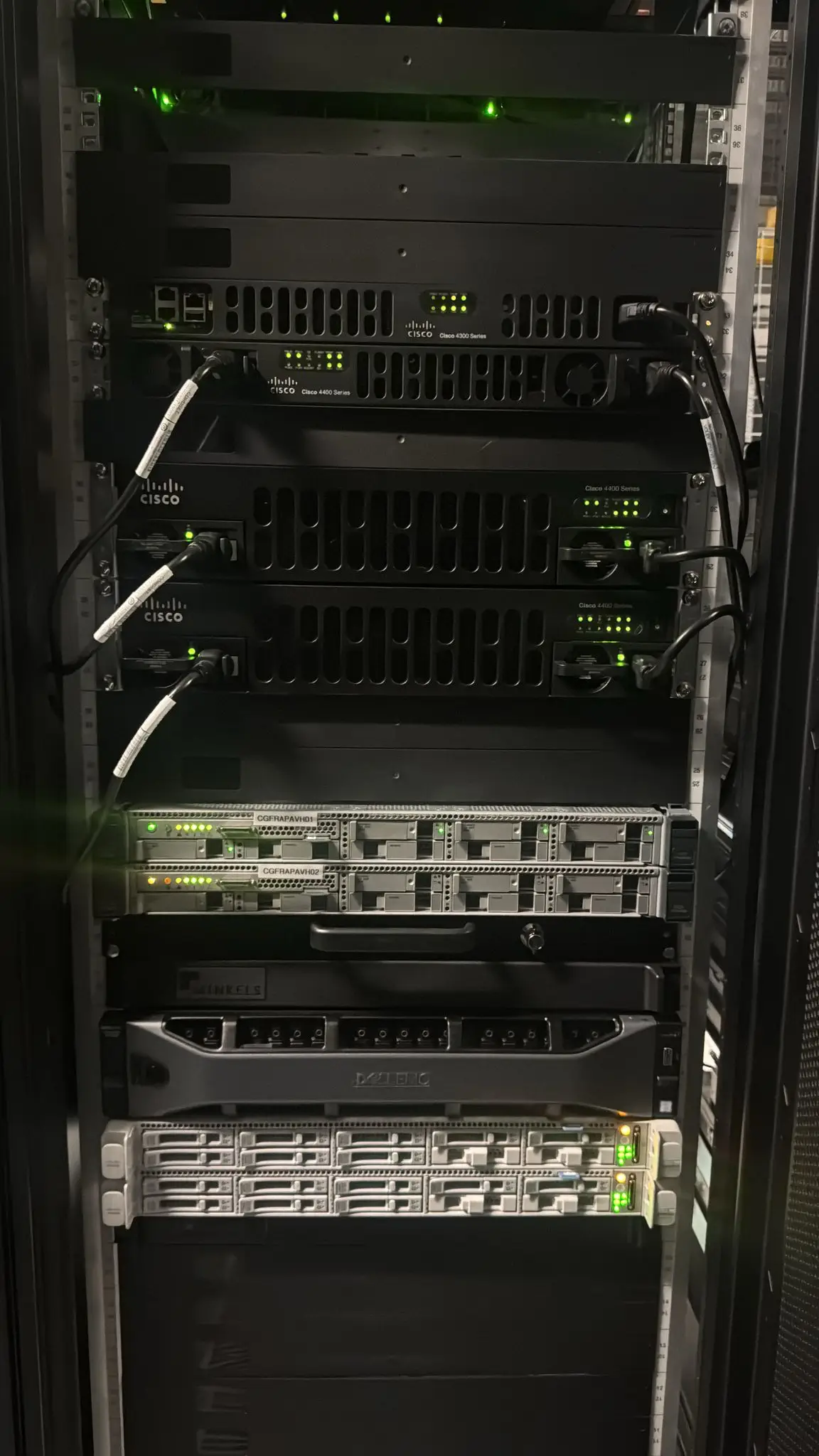
Server Recycling At A Glance
- What it is:Server recycling is the secure decommissioning, data destruction and reuse or recycling of servers, storage and network equipment, documented so the owner can prove every drive was destroyed.
- Who provides it:Computer IT Disposals (Commercial IT Recycling Ltd) provides server recycling and disposal to UK and international organisations. Established 2014, processing at an Environment Agency licensed facility in Nottingham.
- Data destruction:Erasure to HMG Infosec Standard No. 5 or NIST SP 800-88 Revision 2, or physical destruction to BS EN 15713, recorded per drive.
- Data centres:Teams inducted to major UK facilities in Slough, London Docklands (E14), Reading and nationwide, with RAMS prepared for approval.
- Overseas:US, European and Middle East operators book UK server removals remotely, with certification delivered electronically.
- Evidence:Data Destruction Certificate, WEEE Certificate, ESG Report and Asset Audit within five working days, under one collection reference.
What Is Server Recycling?
Server recycling is the end of the server lifecycle, done properly. Equipment is decommissioned and removed, every data-bearing component is erased or destroyed to a named standard, working hardware is reused where possible, and everything else is broken down for material recovery under the WEEE Regulations. The whole process is documented, so you can prove what happened to each unit.
Servers need more care than office IT. A single chassis can hold a dozen drives and an array hundreds, often in RAID sets that are easy to lose track of. UPS units carry hazardous batteries, and network appliances store configurations and credentials. Secure server disposal means treating every one of those as data, not just the obvious hard drives.
Server Recycling, Disposal or Decommissioning?
The terms overlap, but they mean different stages. Decommissioning is taking servers out of service: shutting down, de-racking and removing them. Server disposal is getting rid of the equipment legally and securely. Server recycling is what should happen to it afterwards: data destroyed, reusable hardware returned to use and the rest recovered as raw materials. We handle all three in one process, under one collection reference.
When to Recycle Your Servers
Most organisations recycle old servers at predictable moments. Planning for them early makes the process faster and gives you more value back:
- End of support or warranty:hardware that no longer receives firmware or security updates.
- Cloud migration:workloads moved to the cloud, leaving the on-premise estate redundant.
- Consolidation and refresh:fewer, newer servers replacing an ageing estate.
- Office moves and closures:comms rooms cleared before a lease ends or a building is handed back.
- Lease returns and failures:leased hardware, or failed units that can’t be repaired economically.
Old server disposal is often left until the last week of a lease or migration project. Booking early means inductions, RAMS and out-of-hours windows are arranged in good time.
Servers and Infrastructure We Recycle
Every manufacturer, every generation, in any condition, racked or palletised, from live comms rooms or long-forgotten storerooms:
| Equipment | Examples | How it’s handled |
|---|---|---|
| Rack, tower and blade servers |
|
Drives pulled and destroyed; chassis reused or recycled |
| Storage |
|
Every drive logged by serial number |
| Network and security appliances |
|
Configurations and stored credentials treated as data |
| Wireless infrastructure |
|
Cleared at whole-site scale |
| Backup infrastructure |
|
Tapes shredded to 10mm |
| Power |
|
Hazardous batteries moved under consignment paperwork |
| Rack hardware |
|
Recycled |
Server Data Destruction: Every Drive, Every Array
Computer server recycling starts with the data, and our process treats every drive individually. Drives are pulled, logged by serial number on our ITAD management system, then erased to HMG Infosec Standard No. 5 or NIST 800-88 (Revision 2) matched to your policy, or physically destroyed to BS EN 15713, with failed or unverifiable media destroyed as standard and the method recorded per device.
RAID membership doesn’t dilute accountability: if the array held 96 drives, your paperwork accounts for 96 drives. Hard drives are shredded to 6–8mm and SSDs to 2mm, and degaussing is available for magnetic media. See our hard drive shredding and data destruction pages for the full detail.
Where policy requires it, destruction happens witnessed at your premises; see our on-site hard drive shredding service. Where your policy goes further and requires the complete destruction of whole units, not just the drives, full physical destruction is available on the same certified basis (charges apply, agreed before booking).
Comms-Room Decommissioning, Planned Around Your Operations
Decommissioning is a project, not a pickup, and good server recycling starts with the plan. We plan it with you: a free site survey for larger projects, out-of-hours and weekend windows where systems run until the last moment, lift and loading-dock logistics for city buildings, and de-racking, safe disconnection and removal by our own BS 7858 security-screened staff.
Migrating to cloud, consolidating sites or closing an office, the comms room empties in one planned visit. Every item is counted onto your Waste Transfer Note before we leave, and your copies are emailed the moment the paperwork is signed on our ITAD management system.
Server Removal From Live Data Centres
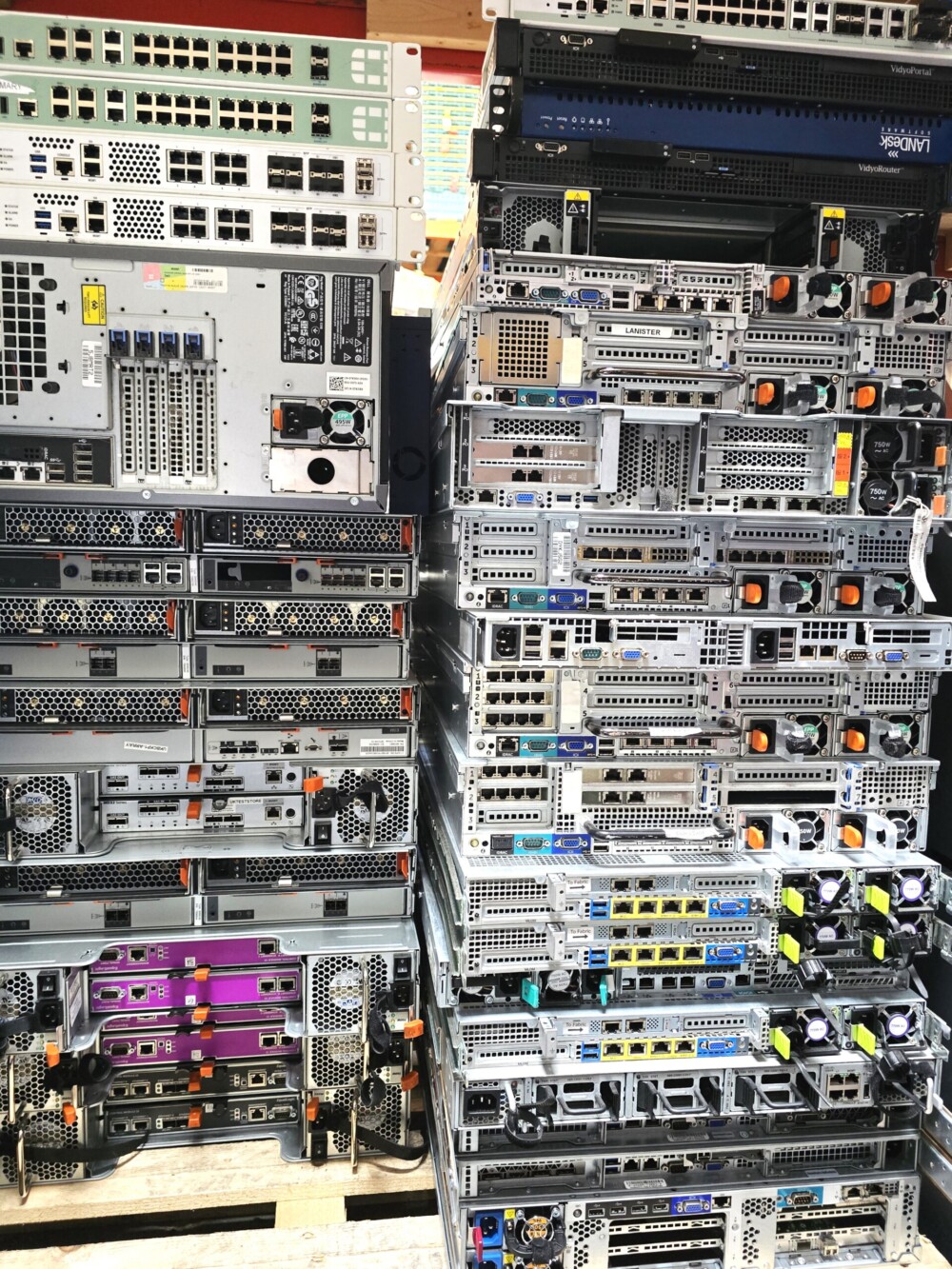
Inside data centres the rules change, and our server recycling teams work to them. Our teams are registered and inducted with major UK data centres, having completed their site access, security and health and safety courses. We arrive with method statements and risk assessments (RAMS), health and safety policies and data security documentation, ready for approval before anyone touches a rack.
We clear racks in live environments without disrupting neighbouring infrastructure, under escort where the facility requires it, with rack-scale drive destruction and a serialised certificate for every drive. We work across the UK’s main colocation areas, including the Slough campus cluster, the London Docklands (E14) carrier hotels and the Reading and Thames Valley facilities. For full-hall projects, see our data centre decommissioning service.
What We Need From You
To plan a data centre job, we ask for the facility name and address, rack and cage locations, your site contact, the access window you have booked, an asset list if you have one, and whether drives must be destroyed on site or can travel to our facility. We handle the rest, including the facility’s own paperwork.
Overseas Operators: Decommissioned in the UK, Managed From Anywhere
A growing share of our server disposal services is booked from outside the UK. US, European and Middle East operators with racks in British facilities run entire removals through us without visiting the site, so there’s no need to fly your own engineers in. References are available if needed.
Tell us what needs removing, and we prepare the plan, method statements and facility paperwork. Where live equipment is involved, every step is approved by you before work begins. We complete the facility’s access requirements, execute the removal and deliver serialised certificates and your compliance pack electronically: the same evidence standard, in any time zone.
Network Refresh Programmes for Integrators and MSPs
This is work we do at programme scale. We support IT service providers and systems integrators running security and network upgrades for major UK organisations, including national utility and healthcare infrastructure programmes, collecting and certifying the displaced equipment behind the rollout: firewalls and switches (Fortinet and Cisco among the regulars), Wi-Fi access points by the hundred and their controllers.
Collections run site by site as your rollout progresses, and every configuration-bearing device gets certified destruction. The integrator upgrades; we take the old equipment out of circulation, so the client’s compliance position is closed the day the new kit goes live.
Server Value Recovery
Old servers aren’t always waste. After certified destruction of every data-bearing component, our team checks units and components such as power supplies, CPUs, memory and SSDs for residual value. Working equipment that is relatively recent and in good condition can be assessed for remarketing: as a guide, equipment under two years old, or up to four years old in larger volumes, may qualify.
Where there is value, you can receive a rebate or collection offset, depending on condition, specification and current market value. Send us your server list with models and ages, and we’ll tell you what has value before anything is collected.
Eco-Friendly Server Disposal and ESG Reporting
Decommissioned equipment is processed at our Environment Agency licensed facility under ISO 14001. Units suitable for continued use are prepared for reuse after certified data destruction, and the rest is broken down for material recovery, with 100% of collected equipment diverted from landfill.
Reuse is always considered first, because extending the life of working hardware saves more resources than recycling it. Your ESG Report quantifies what was reused, recycled and diverted for each collection, giving your sustainability team reportable figures rather than a vague assurance. Server recycling is one strand of our full IT asset disposal service, and site-wide clearances routinely combine servers with office equipment through our computer recycling and laptop recycling services: one visit, one reference.
From Rack to Raw Materials
Hardware that can’t be reused is dismantled at our facility. Circuit boards, metals, plastics and cabling are separated into their own recycling streams, and hazardous components such as batteries are removed and processed separately. Nothing from a server recycling job goes to landfill.
Your Compliance Pack
Within five working days of processing, you receive one pack under a single collection reference: Data Destruction Certificate, WEEE Certificate, ESG Report and Asset Audit, with the Asset Audit listing every drive and data-bearing component individually, reconcilable against your CMDB or asset register. Your team can also follow every device in our ITAD asset portal. View sample documents.
Is Server Recycling Free?
Often, yes. Collection is free for qualifying business volumes, typically 20 or more qualifying items such as servers, desktops and laptops, and lower volumes may still qualify. Eligible hardware can also earn a rebate that offsets any cost.
Some services are chargeable because of the work involved: drive shredding, complete hardware destruction and witnessed on-site destruction. Every charge is quoted up front and approved by you, or your finance team, before anything is booked. See our free IT collection criteria for details.
The quickest way to an accurate answer is a simple equipment list: server makes and models, approximate ages, drive counts and whether any drives must be destroyed on site. With that, we can confirm what is free, what has value and what, if anything, carries a charge, before anything is booked.
How It Works: From Booking to Certificate
Server Disposal and the Law
Under UK GDPR and the Data Protection Act 2018, the data on retired servers stays your responsibility until it is provably destroyed. The National Cyber Security Centre’s guidance on secure sanitisation of storage media sets out how that should be done, including physical destruction where data may remain after sanitisation.
The hardware itself is electrical waste, so it must be recycled under the WEEE Regulations and handed only to a licensed carrier under your Duty of Care. UPS batteries are hazardous waste and must move under consignment paperwork, which we prepare and complete for you. Batteries are then processed through our battery recycling stream.
Why Businesses Choose Our Server Recycling Service
Server Recycling for Regulated Sectors
The evidence standard is identical for every client, but some sectors face closer scrutiny of how their servers are retired. We provide server recycling for financial services and insurance, with serial-level evidence for risk, audit and compliance teams; healthcare, covering patient systems and clinical data; legal, covering document management and email servers holding privileged data; education, covering school, college and university server rooms; public sector, with full documentation for procurement; and IT providers and MSPs, retiring client estates behind your rollouts.
For more detail, see IT recycling for healthcare, IT disposal for the legal sector, education IT disposal, and public sector IT disposal.
Server Recycling Across the UK
We provide server recycling UK-wide, across England, Scotland and Wales, from single comms rooms to data centre halls. Server recycling in London is our busiest area; see our London IT disposal service. For local details, choose your area:


Frequently Asked Questions
Booking Form
Free collection available for qualifying items · certificates within 5 working days · 100% diverted from landfill.